
One Passage–Two Texts
Opinion
By Rabbi Lewis John Eron, Ph.D.
At this years Shavout, I taught Torah study at my local synagogue. The conversation that ensued focused on the Ten Statements, or Ten Commandments. How do Judaism and Christianity read and interpret the text differently?
In the Jewish tradition, each of the three biblical festivals is associated with a pivotal event in the epic history of the Israelite nation: Pesach (Passover) celebrates the Exodus from Egypt; Sukkot (Tabernacles or Booths) recalls the dedication of the Mishkan, the portable shrine that served as the spiritual center of Israel from the time of the Desert Wandering until the building of Solomon’s Temple; and Shavuot (Pentecost or the Feast of Weeks) commemorates Matan Torah, the gifting of the Torah at Sinai. The Torah portion for Shavuot, taken from the Book of Exodus, relates this event from the Israelites’ spiritual and ritual preparations to the revelation of the Decalogue.
This year, I had the opportunity to teach the Torah study at my synagogue, Congregation Kol Ami in Cherry Hill, NJ, on the second day of Shavuot, which was also Shabbat. Since it was the day after Shavuot according to the practice in Israel and the Reform movement, and the second day of the festival for Orthodox and Conservative Jews living in the Diaspora, I focused our study on the Aseret HaDibrot—literally “the Ten Statements,” the Hebrew term for the Decalogue. We discussed the significance of the different names Jews and Christians use for this biblical passage and the various ways both groups count and arrange the ten statements.
As we examined the material, it became evident that the name given to the passage and the way one enumerates the ten statements reflect individual spiritual and theological understandings. Although they contain identical words, the Jewish Aseret HaDibrot and the Christian Ten Commandments represent two distinct interpretations, each reflecting a unique religious orientation. Additionally, within Christianity, the variations between Protestant and Catholic interpretations signify distinct Christian perspectives. By the study’s conclusion, a fellow congregant expressed discomfort in asserting that the Jewish Tanak and the Christian Old Testament were identical. He posited that while we might share the same words, our varied interpretive traditions have birthed parallel yet distinct texts.
When it comes to sacred texts, how we name the material, divide it into small units—chapters and verses—and punctuate them is highly significant. Naming, numbering, and punctuating not only reflect interpretive traditions but also influence later readings. What a text means to us, how it shapes our worldview, and how it supports our social attitudes and political positions rests on how we name it and subdivide it. This is seen in the various ways Jews and Christians read Exodus 20:1-17 and Deuteronomy 5:6-17.
While different traditions number the 10 Statements differently, where one starts the enumeration makes all the difference. Do we start, as the Jews do, with “I am the Eternal your God, who led you out of Egypt, out of the house of bondage,” or do we start, as the Protestants do, with “You shall have no other gods before me” and consider “I am the Eternal your God …” as an introduction?
If we start where the Jewish tradition starts, it is easy to understand the passage as a list of propositions to be discussed–Ten propositions, ten statements, the Aseret HaDibrot, or the Decalogue. Thus, it opens with a statement concerning the Israelites’ self-understanding as a national and spiritual polity. It claims that Israel is a community whose existence rests on the relationship between Israel and the Eternal, the God who delivered Israel from bondage and whom Israel knows by God’s personal name–YHVH. The unfolding of this relationship in the formative years of Israel’s existence binds the five books of the Chumash or Pentateuch together into the Torah or “the Teaching.” It expresses the central idea of a special relationship between Israel and God that unfolds over time and space in the Jewish people’s ritual, spiritual, and communal life. It provides the starting point for the continuing conversation that is Judaism.
The other nine statements ask us to focus on how certain aspects of this relationship play out in the communal and personal lives of the Jewish people. They are not simply directives but rather ideas that demand further study and investigation to be understood and implemented.
Even a short statement such as “Do not steal” calls for further discussion. The directive not to steal prompts us to develop and define concepts such as property, ownership, and legitimate versus illegitimate ways to use and transfer property. Beyond these legal and economic concerns, there are also deeper theological and spiritual issues: If, ultimately, as the Psalmist claims, the earth and all within it belong to YHVH, what claims and responsibilities do we have over that small part of creation we might control during the brief span of our years?
For Jews, the conversation over these ten points is ultimately a spiritual practice. In this conversation, Jews engage with God’s word and discuss and debate with each other and with God over how these ideas are to be expressed and experienced in our hearts, minds, and hands. By engaging in this conversation, we bring ourselves closer to each other and to the Divine as we seek ways to make God’s word real in our world.
If we see the opening words “I am the Eternal your God …” as an introductory statement and start counting with “You shall have no other gods …”, the passage appears as a list of directives–commandments. Rather than imagining a human-divine relationship in which God invites God’s people into a conversation, this enumeration depicts a commanding God who expects God’s people to obey. The expressions “do” and “do not” appear as absolute statements. The question of what an injunction means seems impertinent and appears as a sign of rebellion. God has told people what to do, and at some point, people, being people, will inevitably fail to do so. God no longer appears as the God whose Word promotes discussion and debate. Here, God becomes the judgmental God before whom, in light of God’s law, we fall short.
While both the Christian and Jewish understandings of the role of these ten expressions are far more subtle than can be expressed in a short essay, those who wish to use what they call the “Ten Commandments” as a universal standard of human behavior generally adhere to a traditional Christian reading of the Apostle Paul. They believe that the purpose of the Law–here represented by the Commandments–is to demonstrate human inadequacy. The Ten Commandments, symbolizing the Old Covenant, point to the need for a New Covenant.

The abiding concern of the Abrahamic faiths is how to bring people closer to God. Different faith traditions understand the means to achieve this in various ways. A key difference between Jewish and Christian traditions centers on the question of the purpose of God’s instructions to Israel and humanity, often phrased in Christian terms as “the purpose of the Law.” Both traditions provide distinct answers. For Jews, the Torah–the instruction–illuminates the path to holiness. For Christians, the Law highlights our need for God’s gift of grace through Christ. These two contrasting yet profound theological and spiritual understandings influence our reading of our shared scriptural heritage. They manifest even in foundational aspects such as the organization of the Bible’s books, punctuation of the text, and the counting of verses. The arrangement of the verses and words of the two passages that detail the initial words of the Sinai revelation–Exodus 20:1-17 and Deuteronomy 5:6-17–attest to the distinct spiritual visions of our traditions. Even if the words remain identical, the Aseret HaDibrot (the Ten Statements or the Decalogue) and the Ten Commandments are, in essence, two separate texts.
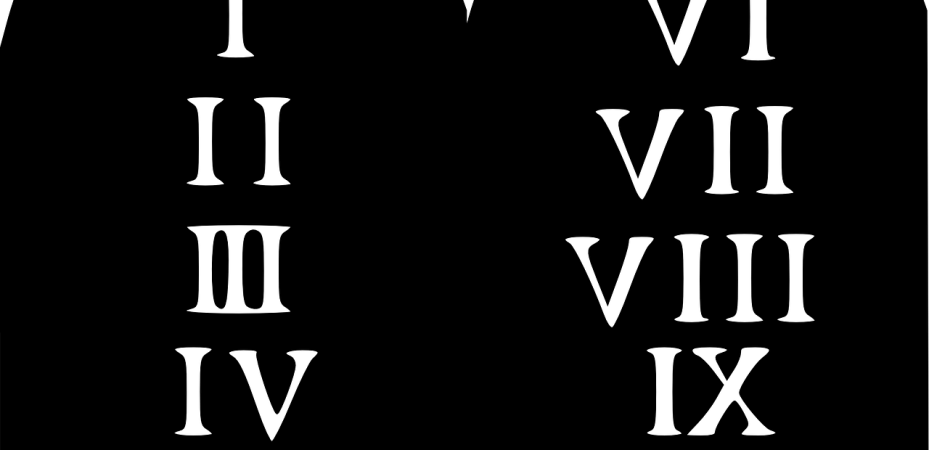
Featured photo credits: Image by Clker-Free-Vector-Images from Pixabay.
 iPub Forum