

Opinion
by Randy Schaffer
Here, in Part 3 of my series on Spiritual practices, I outline what we’ve discussed so far and suggest ways to incorporate these practices into your daily life with intention. Do not be afraid of practicing “right” or “wrong.” You will not only find inner peace, but acceptance and forgiveness. Randy Schaffer is the author…
In the first two posts on Spiritual practices we looked at the history and the importance of using these practices. We should remember that recorded history of most faiths tells us that Spiritual practices are necessary to grow nearer to our Lord. The word “spiritual” is derived from the Latin ‘spiritualitas’ meaning “the breath of life.” Consequently, these practices are designed to draw believers nearer to the Divine.
For years I’ve had a message posted on my fridge that states “We are in the Presence of God at all times and prayer is being attentive of that presence.” God is always near and the awareness of God’s presence happens whenever we are open to recognize it. The Apostle Paul reminds us in the New Testament to pray without ceasing. This can happen since we may call on God with a word or an awareness, as well as a time of prayer, knowing that God always hears. Posting phrases as reminders that the Holy Presence is with us on our desk, a window, or fridge door can draw us away from a hectic time into a quiet space for a few moments to be with God.
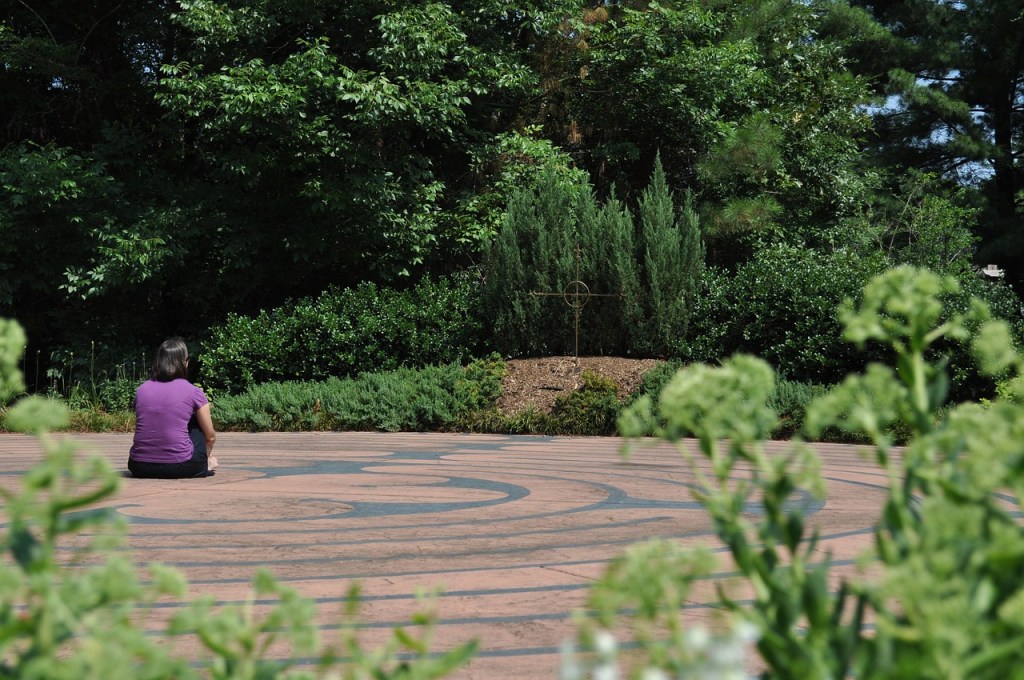
Another Spiritual practice to use is the labyrinth. In Christian traditions many ancient and contemporary churches laid labyrinths into the floor of the church, carved them into exterior stone, or placed them with stones and pebbles on grass or mulch. Labyrinths are a place to walk, pray, and meditate while providing inner space for listening to God. As facilitator of retreats, I’ve taken groups to centers that have permanent labyrinths or have used rope to lay a temporary labyrinth pattern. Labyrinths are created with one single pathway in and out. My personal experiences praying in this way have been calming, enlightening, and restorative.
Simple gestures can also act as reminders that we live in God’s presence. In the Catholic faith, the Sign of the Cross is a blessing or prayer made by tracing a cross with your hand on your upper body using an accompanied recitation of the Triune: “In the name of the Father, and the Son and the Holy Spirit. Amen”. This recitation names the three in one, Holy Trinity. Hebrews affix a mezuzah to the door post at the entrance of their home and at the entrance of rooms within their homes except bathrooms. A Mezuzah is a symbol of protection, Godly presence, and welcoming. The mezuzah contains a small scroll of parchment on which is written a passage from the book of Deuteronomy. The passage, called the Shema, may also be spoken when one enters the home. These kinds of gestures can be powerful ways of practicing the faith.
When we find ourselves in a time of fading faith and feel the need to grow closer to our Lord, remember to begin with setting aside space for times of prayer. Decide when and how you feel led to be in prayer: in silent meditation, sitting, walking, praying aloud, or singing songs of praise and thanksgiving. The desire to follow our Lord throughout life can change everything. We will be given hope, strength, courage, forgiveness, and unconditional love. We will witness changes in our own lives as well as around us. We need not make this seeking difficult for we are not judged by our Lord for ‘getting things right or wrong’. Our forgiving Creator awaits us with open arms.
May your faith be deepened and may you find peace and comfort in the use of Spiritual practices.
Peace and All Good Things,
Randy Schaffer.
“A Dog Can Make A Difference (ISBN 978-1948575904) is available for purchase now!
Featured photo credits: Featured image credits: Image by lee seonghak from Pixabay.
The views expressed in this commentary do not necessarily reflect those of iPub Global Connection.
 iPub Forum