
by Rabbi Lewis Eron, PhD
The second-century sage Rabbi Eliezar said, “Repent one day before your death!” His students, somewhat perplexed asked, “But who knows that day?” He quickly responded, “One should repent today because tomorrow may not come.” (b. Shabbat 153a). Thus, he taught that every day provides us an opportunity to repent.
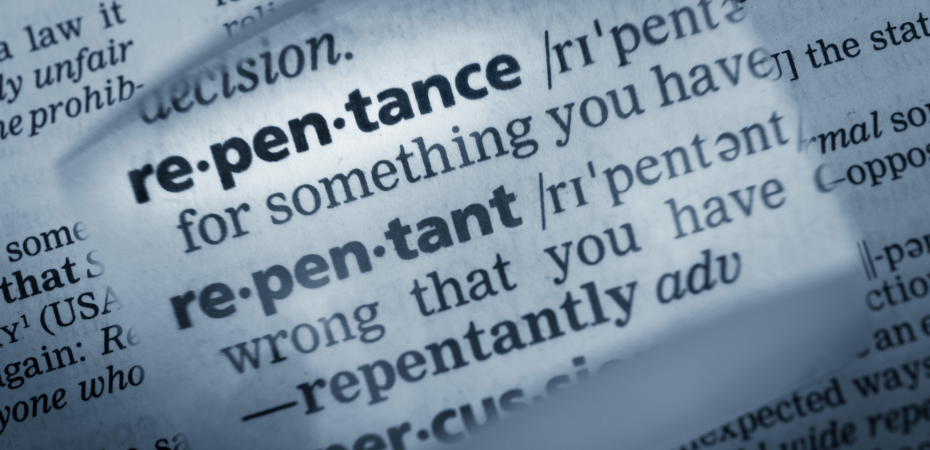
Repentance, teshuvah, in Hebrew, is more than an activity, it is a state of being, an attitude on life. It reaches beyond feeling regret for one’s mistakes and misdeeds and striving to be better. It is how we should drive along the highway of our lives. Teshuvah means watching the road, knowing the terrain, following the map, avoiding obstacles, avoiding detours and focusing on the destination. While sometimes we may make a wrong turn, teshuvah allows for course correction. Sadly, it does not, however, make up for lost time and missed opportunities.

Living in a state of teshuvah requires us to be present. We need to be aware of ourselves and alert to what is around us. Where we have been is a source of information, and where we can go, a source of inspiration. But teshuvah means being attentive to the here and now – the eternal present.
But we do not only live in moment. We live in time. Our lives are enriched by our memories. Our lives are guided by our dreams. Teshuvah allows us to enhance every moment, to evaluate our past and contemplate our future. But it does not change what has happened nor does it control what will be. It does not tell us the day we will die.
Even the righteous are blind to the future. Biblical prophets were not fortune tellers. As best, they offered options and suggested possible results. Teshuvah may hone our skills in dealing with what may occur but it does not protect us from the uncertainties and troubles life presents.
We all live with uncertainty. Rabbi Eliezar told his students, “Repent one day before your death!”. But our personal ethical state is not all that we need to be concerned about. We worry about our family, our community and our world. We may have the spiritual resources to handle life’s turbulence, but which of us wants to test them. The more grounded we are the more alert we are to the uncertainties of life and better able to plan for the unexpected and the inevitable. But even our best plans can be overturned. Life is uncertain and obscure.
Our sages were aware of our essential ignorance in matters closest to us – matters on the personal, familial, communal, and existential levels. In the Midrash (Genesis Rabba 65:17) we read that our sages taught:
“There are seven matters that are hidden from people: ‘[1] The day of [their] death; [2] the day of consolation; [3] the profundity of justice; [4] a person does not know through what he will profit; [5] a person does not know what is in the heart of another; [6] a person does not know what the woman is carrying in her pregnancy; and [7] when the evil empire will fall.”
In other words – we do not know when our lives will end, nor when we will be comforted in times of sorrow, nor when we will experience justice in the world, nor what are the best choices for ourselves and those we care for, nor another’s thoughts and feelings, nor the fate of our children, nor the time of redemption and liberation.
As the sages then proceed to support each of these claims with biblical verses, we get the sense that to them these matters are solely within the divine preview. But if only God knows, that matters little for us. We are still left in the dark. We still have to live with uncertainty. We do not know when we will die.

It is not that we are completely in the dark. We know that someday we will die. We understand that people can recover from grief. We sometimes find justice. We have a sense that life is risky. We can share our ideas and feelings with others. We can give our children our love. We can envision a better future. And with this bit of knowledge, we can peer, however dimly, into the darkness.
If the knowledge that someday we will die can cultivate a life enriched by teshuvah, “repentance through introspection”, what other spiritual qualities can we cultivate to address these other areas of uncertainty? Perhaps – For suffering, compassion? For risks, caution? For justice, righteousness? For others, openness? For children, nuture? For redemption, hope?
Despite our deepest wishes, we cannot get the clarity that we believe will remove the anxiety of not knowing what will be. Knowledge of the future and the secrets of living have not been revealed to us. Our sense of the Divine One is murky and elusive. Neither God nor the universe responds clearly and directly to our desires and our needs.
But, we have tools to navigate the darkness and find some clarity in our confounding world. Despite our ignorance, we are able to find wisdom. We can cultivate the spiritual resources that strengthen us as we deal with life’s challenges – both those we see as detrimental and, surprisingly, also those we may thank are beneficial. They do not provide us with bulletproof armor but with them, and particularly along with a community that cultivates them, we will make it through until the day we die and, hopefully, leave a legacy to guide others on life’s journey.
 iPub Forum