

by Elyse Draper
To finish Pride Month 2024, where should we start? The Stonewall Uprising against oppression and homophobia? On June 28, 1970, marking the first anniversary of the Stonewall Uprising, the inaugural Pride marches took place in New York, Los Angeles, and Chicago. Thousands of LGBT+ individuals gathered to honor the Stonewall legacy and advocate for equal rights. The community didn’t know what was coming in the next decade… yet they would prove again, sometimes with their lives, that supporting each other and fighting for survival takes perseverance and love in the face of hate.

Seersucker jammies and corduroy slacks were still around, but neon and lace worked their way into our wardrobes. Music transformed our world with a click of the channel, and video killed the radio star. Halloween meant we could stay out after the streetlights came on. Clown faces were thrown together from Mom’s makeup bag. Tissue paper witch-costumes had to be made to fit over puffy winter jackets. The generation of latchkey kids, Generation Y, then rebranded into Generation X; our formative years and young adulthood were full of mediocre politicians with a corrupt movie star to rule them all. Or was it the other way around? We raised each other and thus didn’t know about the earlier generations’ unspoken rules, especially how to pretend everything was fine. We were contrary while musically defining ourselves in misogynistic songs about hungry wolves on stripper poles, or something like that — and a musician starring on the Muppet Show, who wore bright flamboyant feathers and sang about musically gifted crocodiles, made us smile, clap, and dance. As long as no one pointed out the aberrant, it did not exist; we didn’t know we were doing it wrong. Many didn’t know we were supposed to hate everything “different.” We started paying attention to the humans behind the semitransparent curtains quietly hung over closet doorways. That beaded curtain sparkled, and the people behind it shone with their inner light; they made us dance, laugh, and escape our drab avocado and sepia-tinted world for a little while. We didn’t know how to feel, as indifference and fearmongering killed faster than the disease that became synonymous with the word “gay.”
In 1981, we started hearing whispers about otherwise healthy young men dying from rare illnesses that only affected the severely immune-compromised. People kept dying, and in 1982, we had a name for the epidemic: Acquired Immunodeficiency Syndrome, AIDS. That same year, the term “GRID,” Gay Related to Immunodeficiency, was used by the media, and the United States found its scapegoat. The only announcements from our government consisted of riding the scapegoat and confirming ignorance about how the disease was spread. Regan didn’t openly acknowledge the crisis until 1987. In testing or treatment, the CDC didn’t acknowledge how many women were infected until 1993.
In the government’s silence, the media pushed the narrative that the disease only affected homosexuals and drug users, so don’t worry about it coming to your suburban neighborhoods. Simultaneously, between the lines, a particular swath of the country whispered that it was a self-correcting problem. We were told it could be passed through saliva, using a public toilet seat, or something as simple as a hug. Ignorance was the norm, and we lost a cross-section of our generation, of all generations, even those hiding in starched and neatly folded, white-collared communities because the disease doesn’t choose who it infects. Diseases infect those who are vulnerable, in this case, as a blood-born pathogen, those exposed to blood, such as healthcare workers, care providers, men and women regardless of sexual orientation, and those receiving blood transfusions. However, the consequences of the societal lack of knowledge and longstanding prejudice allowed fear and violence to spread, which left LGTBQIA+ as threatened by hatred as it had been by the disease. Even against those odds, their response was to educate themselves and care for each other, protest the lack of support, chase legal means to address equality in medical care, and fight for the treatments used by everyone afflicted.
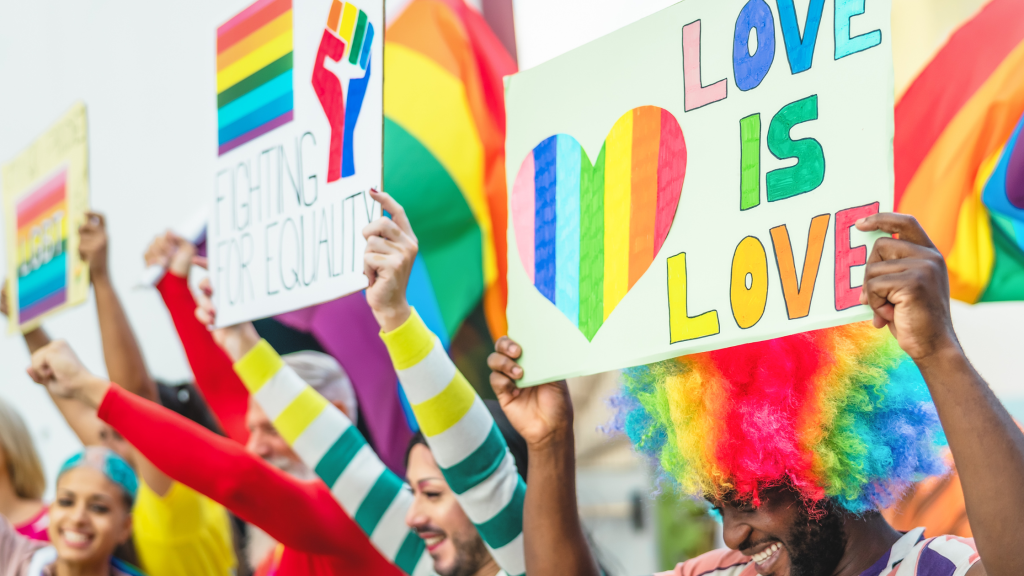
Throughout this turbulent period, alongside so many historically horrific times the community has faced, their response has been to educate themselves and care for each other, protest inequality, fight against mistreatment, and celebrate a love that benefits society. The tireless fight against insurmountable odds is one more point to take pride in, even as the prejudice flows in waves that rarely seem to ebb. In the words of this author’s dearest friend, “Pride is celebrating the strength of those who came before; it’s in fighting to be seen and a reminder that we can be out in public without isolation and fear. It’s not about changing everybody’s minds; it’s about what we have overcome, what we have sacrificed to be here, and how we now know that wherever we are headed, we are not alone.” Pride is love, support, and survival.
 iPub Forum