

by Rabbi James Rudin
For many people, biblical scholarship — with its archaic languages and ancient texts — is boring stuff.
But that’s not true of the Dead Sea Scrolls, discovered by Bedouin shepherds in 1947 in Judean wilderness caves near Jerusalem. The discovery of the ancient Jewish religious texts nearly 80 years ago created an immediate public sensation and an international tale of secrecy and intrigue rivaling the exploits of two fictional super sleuths: Ian Fleming’s James Bond and Daniel Silva’s Gabriel Allon.
Some scholars declared the ancient parchment texts — written mainly in Hebrew or Aramaic 2,100 to 2,300 years ago and wrapped in linen and coated with wax — predicted and validated Christian theological claims about Jesus of Nazareth.
But others questioned the authenticity of the fragile manuscripts. Were they genuine or forgeries, a modern-day hoax?
At the same time, Israelis wanted the scrolls, if they were authentic, to “come home” for permanent viewing in the new Jewish state.
But Israel faced two serious problems in that effort.
During the 1948 Israeli War of Independence, Jordan gained control of the region where the discovery took place, and Israelis were blocked from direct access to the manuscripts. In addition, many Christian professors who had access to the scrolls prevented Jewish scholars from examining the parchments: a case of academic antisemitism.
But after seven years of exclusion, a rare opportunity emerged for Israel in June 1954 when this small ad appeared in The Wall Street Journal:
“Biblical Manuscripts dating back to at least 200 BC, are for sale. This would be an ideal gift to an educational or religious institution by an individual or group. Box F 206, The Wall Street Journal.”

Classified Ad, The Wall Street Journal, June 1, 1954.
Israeli authorities, eager to purchase the advertised scrolls, knew Mar Samuel, the metropolitan of Jerusalem’s Syrian monastery, had placed the four manuscripts in a New Jersey bank vault. But were those scrolls authentic?
The problem was solved on July 1, 1954, when Professor Harry M. Orlinsky of the Hebrew Union College-Jewish Institute of Religion, using the alias of “Mr. Green,” met Metropolitan Samuel’s representative at the Waldorf Astoria Hotel in New York City.
Born in Owen Sound, Ontario, Orlinsky was a superb choice for his secret role. A world-class biblical scholar, “Mr. Green,” was instructed to speak as little as possible when he viewed the scrolls that included the biblical book of Isaiah.
Full disclosure: Orlinsky was famous for being delightfully loquacious. Under his expert tutelage, I wrote my rabbinic thesis on “The Transmission of the Isaiah Dead Sea Scroll” using photocopies of the scrolls.
“Mr. Green” carefully studied the fragments and became convinced they were genuine. Following the clandestine Waldorf-Astoria meeting, Orlinsky called a special telephone number and spoke a single code word, “L’Hayim” (the Hebrew term, “To Life” used in toasts), to confirm the scrolls’ authenticity.
The Israeli government was able to purchase the four scrolls for $250,000 (the equivalent of about $2.2 million today) through an American middleman. The acquisition dealt a significant blow to the anti-Jewish/anti-Israel political and academic prejudices involving the Dead Sea Scrolls.
The manuscripts examined by “Mr. Green” became a centerpiece display in the Shrine of the Book museum in Jerusalem, a must-see attraction for visitors to Israel.
Since 1947, almost 850 Dead Sea Scrolls have been discovered in the Judean wilderness. Thirty percent of the manuscripts comprise biblical books about 1,100 years older than any other existing texts of the Hebrew Bible, the writings Christians call “The Old Testament.”
Another third of the scrolls are Jewish religious texts not included in the Bible, and the final third describes the rules and daily life of a unique community that physically separated itself from the “decadent” Jewish life in Jerusalem and other regions of ancient Israel.
That isolated wilderness society emphasized asceticism and spiritual “purity.” In 68 CE, the Roman Empire physically destroyed the community, but not before the ancient Jewish group hid hundreds of scrolls in nearby caves. The region’s arid conditions helped preserve the manuscripts.
New York University professor Lawrence H. Schiffman, an authority on the Dead Sea Scrolls, asserts that carbon-14 dating makes clear the ancient texts are pre-Christian. They also do not contain overt or predictive references to Jesus, John the Baptist, or the writers of the Gospels.
However, Schiffman notes, “the scrolls help us to understand the nature … of the Judaism that existed when Christianity came into being. Much of what may have been previously taken to be foreign influence is now understood to stem from Jewish roots.”
Today, the Dead Sea Scrolls are easily viewed on the internet. They shine new light on Jewish life and religious practices during the three centuries before the rise of Christianity, and they confirm the basic accuracy of the biblical texts.
The dating of the ancient Hebrew and Aramaic manuscripts also shatters today’s false Palestinian political claims that Jews are modern “interlopers” or “newcomers” to the Holy Land.
As a devotee of mystery and spy novels, I put “Mr. Green’s” undercover exploits right up there with James Bond and Gabriel Allon.
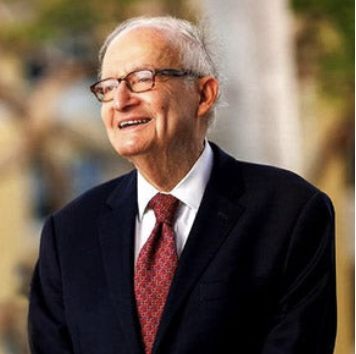
About the Author: Rabbi James Rudin is a trailblazer in interfaith dialogue, a decorated religious leader, and a fearless advocate for understanding across cultural and spiritual divides.
Ordained by the Hebrew Union College-Jewish Institute of Religion, Rabbi Rudin pursued truth and history through graduate studies at the University of Illinois. His contributions to faith and scholarship have earned him honorary doctorates from Saint Leo University, Saint Martin’s University, and his rabbinical alma mater.
In 2022, his extraordinary efforts were recognized globally when Pope Francis named him a Papal Knight of Saint Gregory—a rare honor for a Jewish leader and a testament to his groundbreaking work in building bridges between faiths.
For over three decades, Rabbi Rudin served as the American Jewish Committee’s Interreligious Affairs Director, where he redefined what it meant to engage in religious diplomacy. Today, he remains a vital force as AJC’s Senior Interreligious Adviser and a member of its Board of Governors.
An influential voice in the classroom and synagogue, Rabbi Rudin is the Distinguished Visiting Professor of Religion and Judaica at Saint Leo University and has taught at Florida Gulf Coast University’s Renaissance Academy.
His spiritual leadership has taken him from Kansas City and Champaign-Urbana pulpits to the front lines as a U.S. Air Force Chaplain stationed in Japan and Korea, proving his commitment to service knows no borders.
Rabbi Rudin is the author of The People in the Room: Rabbis, Nuns, Pastors, Popes, and Presidents, Christians & Jews―Faith to Faith: Tragic History, Promising Present, Fragile Future, and co-author of Why (Not) Me? Searching for God When We Suffer.
 iPub Forum