
by Rabbi James Rudin
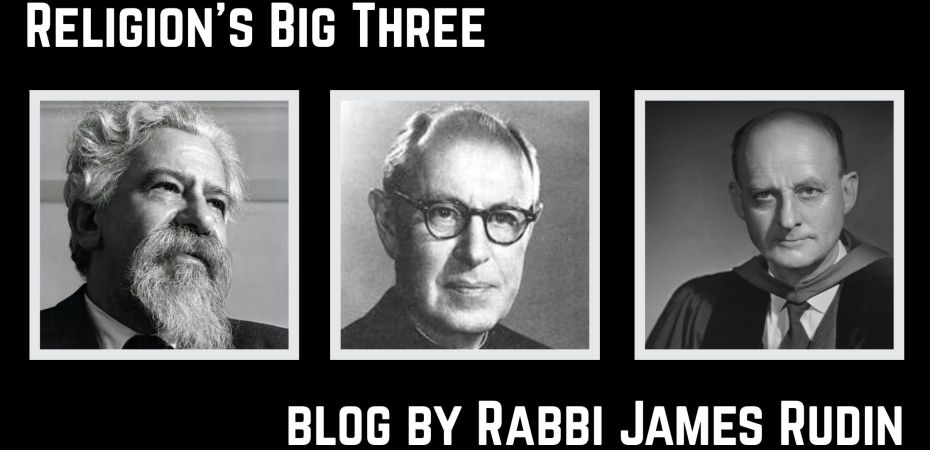
Three 20th-century “Giants of Faith” continue to decisively influence contemporary American religious life: Rabbi Abraham Joshua Heschel (1907-1972), Father John Courtney Murray (1904-1967), and Professor Reinhold Niebuhr (1892-1971).
And here’s why:
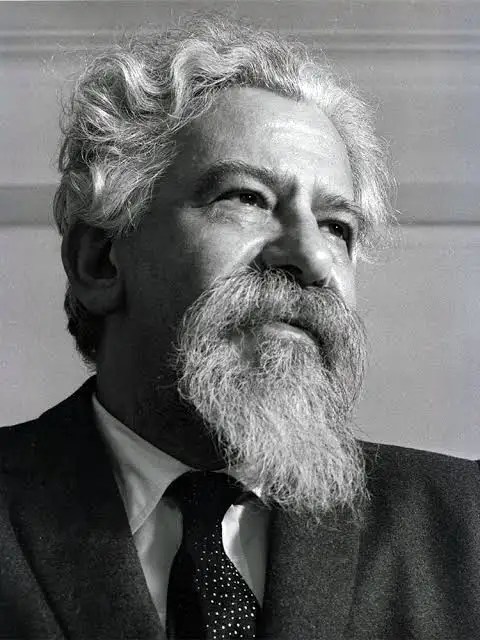
Rabbi Abraham Joshua Heschel, theologian and civil rights activist, circa 1965. Photo credit: Susannah Heschel
Heschel was born in Warsaw, Poland, the scion of a centuries-old rabbinic dynasty. Like millions of other Jews living in Eastern Europe, he was a victim of state-sponsored antisemitism. Heschel, fluent in at least five languages, earned his Ph.D. at the University of Berlin in 1933, the same year Nazi leader Adolf Hitler became Germany’s chancellor. Heschel’s thesis focused on the Hebrew prophets.
In 1940, the Hebrew Union College saved his life and brought Heschel to the school’s Cincinnati campus, allowing him to escape the Holocaust (though many members of his family, including his mother and two sisters, did not). In 1946, he became a professor at the Jewish Theological Seminary in New York City, a position he held until his death in 1972 at age 65.
At the now historic 1963 Religion and Race Conference in Chicago, Heschel delivered a powerful address that began:
“At the first conference on religion and race, the main participants were Pharaoh and Moses. The outcome of that summit meeting has not come to an end. Pharaoh is not ready to capitulate. The exodus began, but is far from having been completed.
In fact, it was easier for the children of Israel to cross the Red Sea than for a Black person to cross certain university campuses. Let us dodge no issues. Let us yield no inch to bigotry, let us make no compromise with callousness…some are guilty [of racism], but all are responsible.“
In March 1965, Heschel walked beside Dr. Martin Luther King, Jr. in the famous march from Selma to Montgomery, Alabama. Heschel declared: “I felt my legs praying.”
King aide Andrew Young, later mayor of Atlanta and US Ambassador to the United Nations, commented that Heschel spoke and looked like a biblical prophet. Young added that he and many other MLK associates carried paperback copies of Heschel’s book “The Prophets” and constantly turned to the rabbi’s words for inspiration. Heschel was also a strong public opponent of the Vietnam War.
His lasting contribution to American religious life was his extraordinary dedication to social justice and civil rights. Heschel coupled that activism with an emphasis on religious mysticism and radical spiritual wonderment. Both had been minimized, even neglected, by many Jewish and Christian religious leaders; however, Heschel brought them into the mainstream of theological thought.

Photo credit: Wikipedia
Murray, a Jesuit theologian born in New York City, asserted the Constitution’s First Amendment is a guarantee that Roman Catholicism could flourish as a religious minority in the US, unlike the Church’s dominant majority status in some European nations where it was the established state religion.
Murray, a robust champion of freedom of conscience and religious liberty, believed the No Establishment and Free Exercise clauses provided assurance that Catholicism, indeed, all religions, could thrive in America.
Murray pointed out that the U.S., from its very inception, has been and continues to be a religiously pluralistic nation. A strong separation between church and state was not only required, but also a constant reality from the beginning of our national life. Murray opposed any attempt to legally convert the United States into a Christian state.
In 1954, the Vatican instructed Murray to cease his public teachings on religious liberty. However, he was vindicated in 1963 when he played a key role during the Second Vatican Council and was the chief author of the Council’s strong affirmation of individual religious freedom. In addition, Murray urged his seminary students to engage in constructive fraternal dialogue with Jews and other non-Catholics “on a footing of equality.”
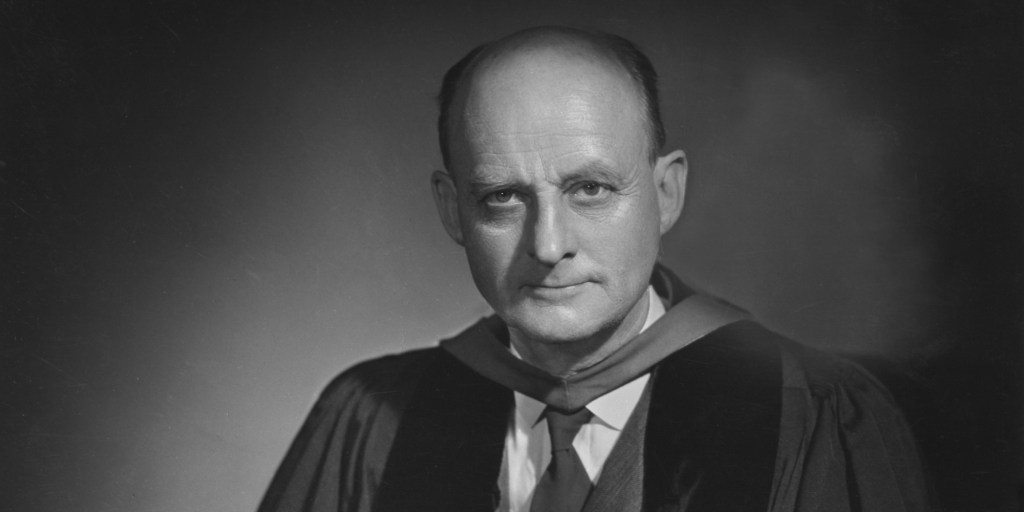
Niebuhr was a strong critic of all attempts to convert Jews to Christianity:
“Christian missionary activity among the Jews … are wrong not only because they are futile … They are wrong because the two faiths despite differences are sufficiently alike for the Jew to find God more easily in terms of his own religious heritage than by subjecting him … to a faith … which must appear as a symbol of an oppressive majority culture … Practically nothing can purify the symbol of Christ as the image of God in the imagination of the Jew from the taint with which ages of Christian oppression in the name of Christ tainted it.”
Niebuhr taught for many years at Union Theological Seminary in New York City and was a leading public intellectual. He abhorred weak-willed Christians who failed or were afraid to participate in the political arena. Niebuhr was a vigorous advocate of what he termed “Christian realism.”
He clearly understood human nature when he asserted: “The sad duty of politics is to establish justice in a sinful world. Man’s capacity for justice makes democracy possible, but man’s inclination to injustice makes democracy necessary.”
Niebuhr, a Missouri-born Protestant minister, hated political leaders who loudly proclaimed that God was “on their side.” His teachings deeply influenced many political leaders, including Presidents Barack Obama and Jimmy Carter, as well as Senator John McCain.
Niebuhr was an early public foe of Nazism, and he opposed all forms of antisemitism. Not surprisingly, he urged his fellow Christians in the US and throughout the world to work for the security and survival of the Jewish state of Israel.
Although Heschel, Murray, and Niebuhr died more than fifty years ago, their influence continues to grow as true “Giants Of Faith.”
 iPub Forum