
By Jennifer Wyman
I am a descendant of immigrants who arrived in this land before it was a nation. My line begins in England with Thomas Wymant of Hertfordshire in the sixteenth century and crosses the Atlantic with John Wyman, one of the early English settlers of Massachusetts. Well before the Constitution, before the Republic, four generations of my family were already rooted in the land that would become the United States of America. If American birthright followed the law of primogeniture, this inheritance would answer first to the Native nations whom the expansion of settlers, including my own forebears, subjected to dispossession, devastation, and, in its most unsparing reality, genocide. Yet within that same logic of succession, my lineage stands among the earliest of those who came after, shaped by the founding of this country and bound to the consequences of what it became.
It is, by conventional American mythology, a clear pedigree. Early settlers. Revolutionary fighters. Union soldiers. Participants in the founding of a nation and in its preservation. From one perspective, it is the kind of ancestry that would satisfy those who obsess over blood, origin, and historical ownership.
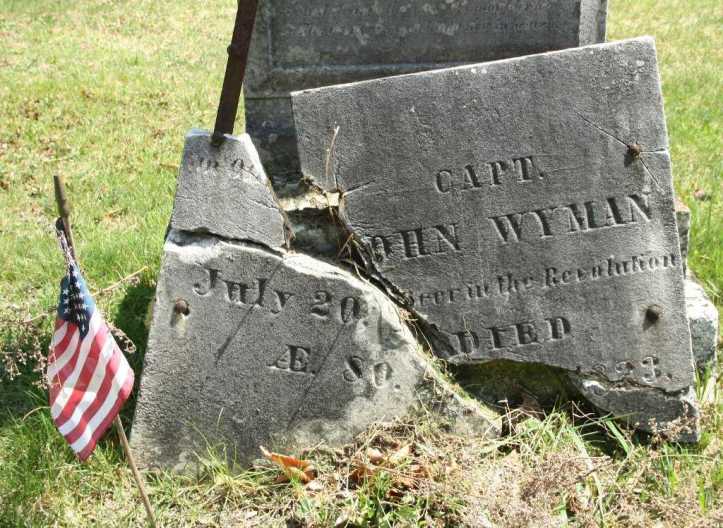
Image: The grave of Lieutenant John Wyman. Credit: http://www.findagrave.com
Lieutenant John Wyman of Woburn, Massachusetts, born in 1743, stood among the Sons of Liberty who carried out the Boston Tea Party. He fought at Lexington and Concord, then at Bunker Hill, and continued through the Revolutionary War until he was promoted for meritorious service. He spent the rest of his life shaped by that conflict, a man of fierce temperament who resisted authority when he believed it unjust and never stopped recounting the revolution he helped ignite.
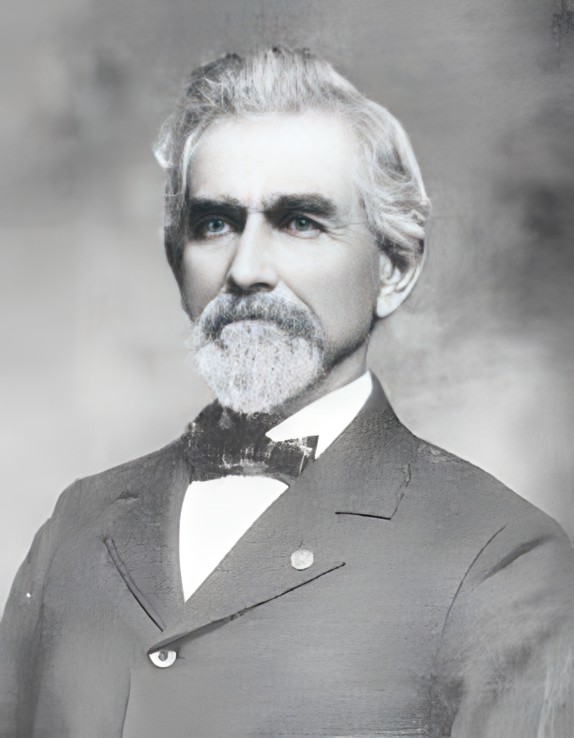
Image: Emory Wyman. Credit: Clay Bassett, Buffalo County, Nebraska, and Its People (Chicago, 1916)
Nearly a century later, my ancestor Emory Wyman, born in 1834, fought in the Union Army during the Civil War, part of the generation that preserved the fragile nation created by men like John Wyman. After the war he worked as a teacher, builder, and farmer, and eventually served in the Nebraska legislature. He believed civic duty was not optional and introduced a bill advocating compulsory voting, insisting that participation in democracy was a mandate.
These men actively and aggressively championed the civil religion that is the American Dream. One fought in the founding violence of the United States. Another fought to preserve the Union when it nearly fractured. They lived inside the defining conflicts of their eras and helped shape the nation that exists today. It’s a peerage enough to make a Proud Boy jealous.
And yet, heritage is not destiny. Blood is not imprimatur.
Because the same lineage that could be described as deeply American also reveals the unfinished moral story of this country. The founding was not pure; the preservation not simple. The promise has never been fully realized. Each generation inherits both achievement and indictment.
I also live in a body that exposes another truth. I am a quadriplegic. In the calculus of certain modern policy agendas, people like me are reduced to cost, burden, liability, a life measured not in dignity but in dollars. In one narrative I descend from men who helped found and preserve this country. In another I am marked expendable. Such reasoning reflects a system willing to rank human value according to utility and expense. When a state begins to weigh the worth of its citizens this way, it drifts from its own declared principles and narrows the meaning of liberty itself.
So if this lineage means anything, it confers responsibility.
Responsibility to reject any ideology that reduces human worth to origin, purity, strength, or conformity. Responsibility to confront the distance between national myth and national reality. Responsibility to insist that the country live up to its own stated principle.
My sixth great-grandfather rebelled against imposed authority in the name of liberty. My third great-grandfather fought to preserve a nation built on that idea. If their legacy carries forward at all, it does not belong to exclusion, fear, or hierarchy but to the continuing demand that freedom must expand, not contract.
If I claim any inheritance from this history, I accept the burden of obligation.
We must be better.
The generation that founded this country did not agree on everything, but they agreed on one essential principle. Power must be restrained, not concentrated. They had lived under arbitrary whims of a distant monarch, surveillance, punishment without representation, and authority justified in the name of order and security. They called such rule tyranny. By their own words, they would recognize its return, and they would not praise it.
“A Prince whose character is thus marked by every act which may define a Tyrant, is unfit to be the ruler of a free people,” so sayeth the Declaration of Independence
What is unfolding now—Christian hegemony, persecution of the “huddled masses yearning to breathe free,” the dehumanization of disabled persons, the elderly, the poor—is a betrayal to their words, immortalized in the country’s founding charter: “That whenever any Form of Government becomes destructive of these ends, it is the Right of the People to alter or to abolish it, and to institute new Government.”
Each generation carries the burden of turning inheritance into something better, shaping what is built through injustice into a future that yields meaning rather than futility. But the pattern persists. The religious oppression early settlers fled lives on in their descendants and in the systems they create. The liberty they demand they also deny to others. Hypocrisy runs through human history; what should disturb us is the ease with which it is embraced and celebrated now.
There are people today fleeing persecution, violence, and instability not unlike the conditions that once drove settlers across an ocean. They seek safety. They are met with persecution, violence. They are stripped of their humanity, justified in the language of patriotism and beneath a flag once lifted for freedom, now hanging in shame, a bitter parody of its own promise.
Symbols reveal their truth in how they are used. The flag was born as a sign of resistance to domination, a declaration that authority must answer to the governed. When it is raised to justify domination, its meaning is inverted.
There is a sad and familiar irony here. Those who proclaim themselves Christian yet wound “the least of these” repeat the very pattern Jesus condemned. It is pharisaic in the truest sense, loud in profession, empty in mercy. The crown of thorns was meant as mockery, a symbol of humiliation and false authority pressed onto his head. Yet the mockery did not erase him. In that act of scorn, the symbol meant to diminish instead revealed the truth it tried to deny. Power misused often exposes what it seeks to conceal.
The same pattern unfolds in our own symbols. A flag raised to proclaim freedom becomes, in the hands of those who deny dignity to others, an emblem stripped of its promise. Like the crown, the gesture of mockery turns back on itself. What is meant to justify exclusion instead exposes the contradiction between what is proclaimed and what is practiced.
The same question now confronts this country. Whether its symbols will remain instruments of exclusion, or whether the contradiction between principle and practice will force an accounting. Nations, like people, are measured by what they do when faced with their own reflection.
This inheritance calls us to a reckoning and to the judgment of history, from which there is no appeal.
 iPub Forum
Magnificent, Jennifer! I love this call to national repentance which brings us face-to-face with the non-duality of pride and shame in American identity. It reminds me of the ancient prophets who mirrored God’s own passionate love and searing anger, directed at one and the same time towards the nation of Israel. On this 250th anniversary year, may we celebrate the natural beauty and political ideals of our nation while honestly admitting our collective failure to protect our land and all who dwell here.
LikeLiked by 1 person