
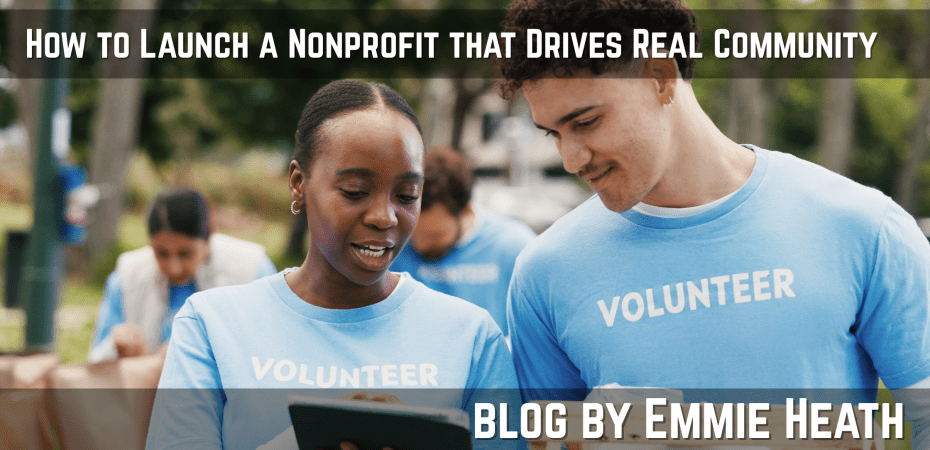
By Emmie Heath
New nonprofit founders, especially writers, educators, and community-minded creatives who want more diverse voices and better access, often feel the pull to start a nonprofit organization and then hit a hard question: how does a good cause become a real, measurable social change impact? Passion is common; clarity, structure, and trust are harder to build, and mission-driven organizations can lose momentum when the basics feel confusing or intimidating. The opportunity is bigger than paperwork or a name: it’s creating a mission that holds up under pressure and a plan that people can rally around. With the right foundation, community engagement strategies stop feeling like outreach and start feeling like belonging.
Set Up Your Nonprofit Legally and Lead It Well
Here’s how to turn intent into a real entity.
This process helps you register a nonprofit the right way, from state paperwork to IRS approval, so your mission can attract funding and public trust. For authors and readers committed to social-change publishing and diverse perspectives, a solid legal and leadership foundation keeps your programs focused on access, inclusion, and long-term credibility.
Step 1: Choose your structure and draft core rules
Start by deciding who you serve, what you do, and what “success” looks like in plain language. Then outline how your organization will run day-to-day by creating bylaws, since creating bylaws sets expectations for decision-making, meetings, and accountability.
Step 2: Write articles of incorporation that match your mission
Draft your articles to clearly state your charitable purpose, limits on private benefit, and what happens to assets if you close. This is where you protect the heart of your work, so your storytelling, education, and community programs stay aligned with public-benefit requirements.
Step 3: File your incorporation paperwork and lock in the details
Submit your articles to your state, confirm your official name, and keep stamped copies in a shared folder for your team. A checklist like file articles with AZ Corp. Comm. reinforces the idea that filing is not just administrative, it is your legal starting line.
Step 4: Build a governance setup your board can actually use
Choose initial officers, define board terms, and set a meeting rhythm that fits your capacity, such as monthly during launch and quarterly once stable. Keep roles simple and visible so board members can support equity-focused goals without confusion or overreach.
Step 5: Prepare and submit your 501(c)(3) application, then lead the rollout
Gather your narrative description of activities, a realistic first-year budget, and basic policies such as conflict of interest, then file your IRS application.
Nonprofits don’t usually stall because the mission is weak; they stall because the operating systems are. If you’re stepping into an executive director-style role, consider leveling up core management skills like budgeting, planning, team leadership, and execution. For some founders, that looks like mentorship and short courses; for others, it can mean formal education, such as earning an MBA, so tasks get delegated, timelines get met, and your mission moves from paperwork to practice.
Strong structure makes it easier to invite others in and deliver impact with consistency.
Build a Board and Volunteer Team People Trust
A nonprofit can be legally “set,” but it won’t be steady until the right people are sharing the load. These tips help you recruit with clarity, set healthy expectations, and build supporter engagement without draining your core leaders.
- Write a one-page “yes/no” board role description: Before you recruit, spell out board member responsibilities in plain language: fiduciary oversight, attending meetings, voting, fundraising expectations, and committee work. Add your time estimate per month and 2–3 example tasks like “review the monthly financials” or “make 3 donor thank-you calls.” This protects your governance structure from becoming a vague “help when you can” arrangement.
- Recruit for gaps, not vibes (use a simple skills matrix): Make a grid with 6–8 categories your nonprofit actually needs this year, finance, legal/compliance, program expertise, community relationships, marketing/storytelling, and lived experience connected to the mission. Then recruit intentionally: one person per gap, with a backup list of prospects. Good nonprofit board recruitment is less about big titles and more about people who can show up consistently.
- Create a board development pipeline, not a one-time search: Set up a small committee focused on recruiting and onboarding, training, and ongoing support. A nominating and board development committee helps you avoid the classic cycle of “we found someone, now what do we do with them?” Build in simple education: a 30-minute orientation to bylaws, conflict-of-interest rules, and your decision-making process.
- Run a 45-minute onboarding that makes people useful fast: Give every board member and key volunteer the same starter kit: mission and values, bylaws/high-level policies, your annual budget, and a one-page program overview. Assign a buddy for the first 60 days and ask the new person to own one small, visible responsibility quickly, like chairing a short committee meeting or drafting a partner outreach email. Early wins build confidence and retention.
- Treat volunteers like a program, not a favor: Since 6 in 10 charities are struggling to recruit the volunteers necessary to support their operations, make your volunteer roles easy to say yes to. Offer “micro-volunteering” tasks (30–90 minutes) like packing kits, sensitivity-reading a flyer, or staffing a book table, plus clear start/end times. Confirm every shift in writing and include who they report to, so volunteers don’t accidentally create extra work.
- Protect your leaders with boundaries and rhythms: Put two guardrails in place immediately: no one holds more than two key roles, and every recurring role has a backup. Add a short monthly check-in question, “What should we stop, start, continue?”, to catch burnout early. When your governance and budgeting are paired with realistic staffing assumptions, your mission stays credible, and your operations stay predictable enough to run on a simple checklist.
Steady Operations Checklist You Can Reuse Monthly
With your people plan in place: This checklist keeps your nonprofit running cleanly, and it gives authors a grounded, behind-the-scenes framework to write impact stories that respect community voices.
✔ Confirm required filings and due dates on one shared calendar
✔ Review bank activity weekly and categorize every transaction
✔ Reconcile accounts monthly and store receipts in one folder
✔ Track restricted funds separately and document every approved use
✔ Document program outputs monthly and capture one participant-informed insight
✔ Standardize intake, consent, and privacy steps for sensitive stories
✔ Set a weekly admin hour to batch email, approvals, and follow-ups
Finish this once, then reuse it like a reset button.
Nonprofit Launch Questions, Answered
If you’re feeling stuck, these are the questions people ask first.
Q: What funding sources should a brand-new nonprofit start with?
A: Start with a simple mix: individual donors, small business sponsorships, and a modest recurring giving option. A clear one-page case for support plus a concrete first project makes it easier for people to say yes. Keep your budget lean until revenue becomes predictable.
Q: How do I handle grants when I’m new and don’t have a track record?
A: Look for small, local, and capacity-building grants that fund planning or pilot programs. Ask the funder what a “strong first-time applicant” looks like and request sample proposals or scoring rubrics. If you’re declined, treat feedback as your revision list, not a verdict.
Q: What IRS compliance steps trip up first-time founders the most?
A: The common trouble spots are mixing personal and nonprofit money, weak documentation, and late filings. Open a dedicated bank account, keep clean records of restricted gifts, and set reminders for every required deadline. When unsure, schedule one hour with a nonprofit CPA or legal clinic to confirm your setup.
Q: How can I engage donors without turning my community into a marketing prop?
A: Lead with consent, context, and shared credit, and let participants review quotes when safety or dignity is at stake. Report outcomes alongside what people say they want next, not just what looks inspiring. Donors stay when they trust your integrity and clarity.
Q: Why do people worry about fraud in nonprofits, and how do I build trust?
A: Some fears come from headlines, but fraud is less prevalent in nonprofits than in many other sectors. Build confidence with basic controls like two approvers for large payments, monthly reconciliation, and transparent reporting. Share the systems you use so supporters can see the guardrails.
Keep it simple, stay accountable, and take one practical step this week.
Turning Nonprofit Ideas Into Real, Local Community Impact
Starting a nonprofit can feel like balancing heart and paperwork, big needs, limited time, and plenty of “What if I mess this up?” moments. The steadier path is to lead with clarity, ask for help early, and treat compliance, funding, and relationships as learnable parts of the work. When that mindset sticks, nonprofit founder motivation holds through setbacks and the focus shifts from fear to community impact encouragement, one honest decision at a time. Small, steady steps build the kind of nonprofit that lasts. Choose one doable action this week: write your mission in one sentence and share it with a trusted person for feedback. That’s how empowerment through nonprofit work grows into social justice advocacy that strengthens real community connections.
 iPub Forum