
by Rabbi James Rudin
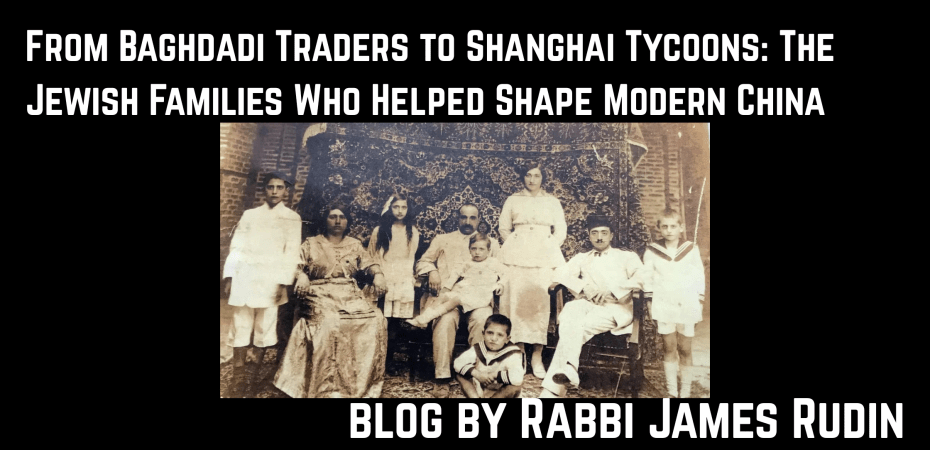
Header image: EZRA & MASOUDA SASSOON and family, Baghdad, 1919. (photo credit: Sassoon family / The Jerusalem Post)
In 2010, during Supreme Court Justice Elana Kagan’s tense Senate confirmation hearing, Lindsay Graham (R-SC), who supported her nomination, jokingly asked President Barack Obama’s nominee what she did on Christmas Day. It was a strange, even bizarre question because it had absolutely nothing to do with her judicial qualifications. But Kagan’s humorous reply completely disarmed her Senatorial opponents: “Like all Jews, I was probably at a Chinese restaurant.”
But there is much more to the Jewish-Chinese connection than choosing food from column A or column B on a menu on December 25th.
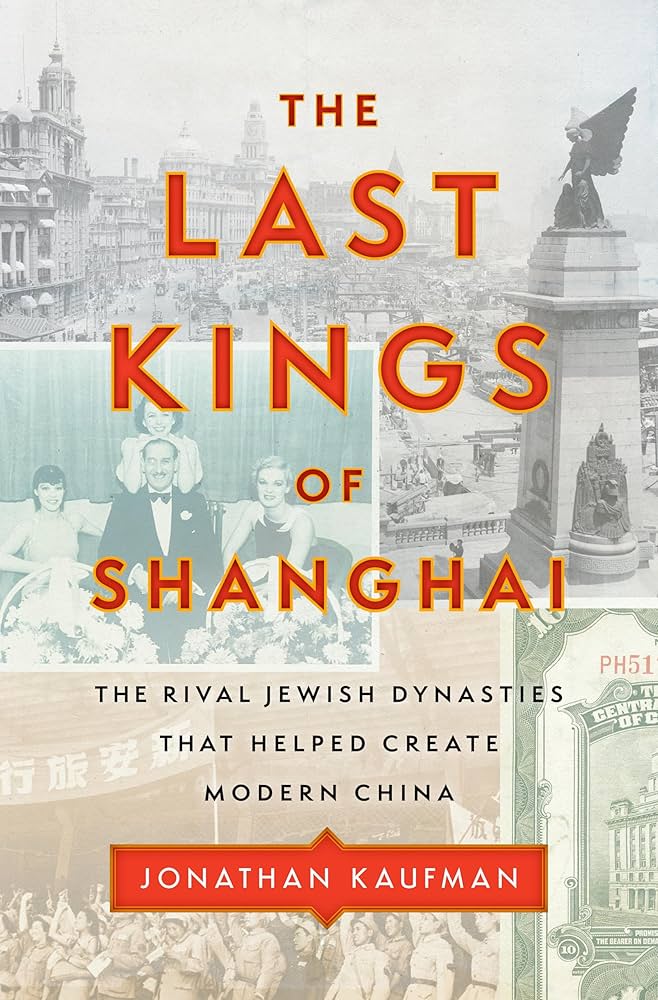
In his fascinating book, The Last Kings of Shanghai: The Rival Jewish Dynasties That Helped Create Modern China (Penguin), Jonathan Kaufman tells the little-known history of how two remarkable Sephardic families became major economic and political forces in China.
Originally from Baghdad, the Sassoons and the Kadoories established rival commercial empires in Shanghai and Hong Kong during the 19th and 20th centuries. For more than 175 years, these families profited greatly in shipping, commodities, textiles, real estate, and selling recreational and medicinal opium to the Chinese. President Franklin D. Roosevelt’s maternal grandfather, Warren Delano, Jr, also profited from the Asian opium trade.
The Sassoons and the Kadoories were a vital part of “The Bund,” Shanghai’s multi-national pre-World War II global financial and cultural center, which operated as an independent enclave outside the political control or legal regulations of the Chinese authorities. That arrangement ended in 1949 with the establishment of the People’s Republic of China, led by Communist leader Mao Zedong.
In the 1930s, the Sassoon and the Kadoorie families aided the 23,000 European Jewish refugees who found safe haven in Shanghai. Despite the Japanese occupation of Shanghai, these refugees, who were confined to a ghetto of one square mile, survived the Holocaust.
Among them were teenagers Michael Blumenthal, who would become U.S. Treasury Secretary in the Carter Administration, and Israeli diplomat Joseph Tekoa. Born in Shanghai in 1941, Laurence Tribe was a distinguished Harvard law professor.
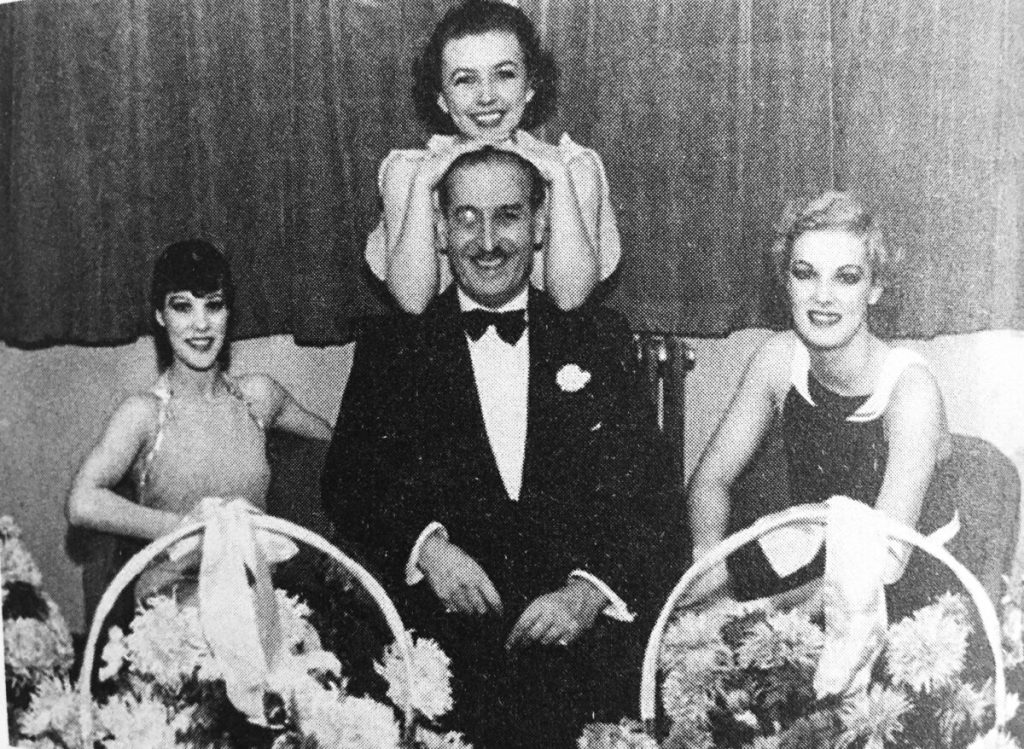
Image: Victor Sassoon in his heyday in Shanghai, China / CREDIT: Sheldon Kirshner Journal
Victor Sassoon, the great-grandson of dynasty founder David Sassoon, was educated in England at Harrow and Cambridge. A rich playboy who raised racehorses, Victor built the landmark Art Deco Cathay Hotel in 1929. Victor fled his beloved Shanghai in 1948 as the Communists gained power, and he never returned.
The Kadoorie family owned the China Light and Power Company in the British Crown Colony of Hong Kong. They also constructed Hong Kong’s Peninsula and Repulse Bay hotels, which I visited several times when I was a US Air Force Chaplain stationed in Japan and Korea. And like their arch-rivals — the Sassoons — the Kadoories became enormously wealthy through shipping and real estate holdings.
The Cathay Hotel in Shanghai, which had hosted Charlie Chaplin, Marlene Dietrich, Douglas Fairbanks, Cornelius Vanderbilt, and other celebrities of the 1930s, was expropriated by “Red China,” and it reopened only in recent years as a luxury hotel. Kaufman estimates that the large Kadoorie family, which has held together better than the quarrelling Sassoons, is today worth more than $11 billion dollars.
For nearly 200 years, the Sassoons and the Kadoories absorbed China’s culture as well as its tangled political and social history. China became an integral part of these families’ emotional DNA.
Although the two Jewish families helped shape modern China by establishing schools, philanthropies, synagogues, and businesses, they were also inextricably linked to British global imperialism.
An enigmatic conversation sums up the ambivalent relationship that still exists between the Sassoons and the Chinese. In 2013, James Sassoon, a British treasury official, traveled to Beijing and attempted to reclaim his family’s vast property holdings.
In a meeting with China’s finance minister Lou Jiwei, Sassoon said: “It is a shame China has not allowed… former owners to come back and reclaim their properties.”
Lou looked at him and broke into a smile. He switched to English and leaned forward: “Let’s let bygones be bygones.” Or, as they say in a language that is neither English, Hebrew or Chinese: Sic transit gloria mundi — Thus passes worldly glory.
 iPub Forum