
By Ann Marie B. Bahr
My dad grew up on a dairy farm that also produced peas and corn. My mom grew up in a small town that had paved roads but no traffic lights. I grew up in the same town as my mom, at a time when its population had grown to around 6,000 souls. And yes, “souls” is what they were considered (not consumers, taxpayers, or clients), and they came primarily in Lutheran and Catholic varieties.
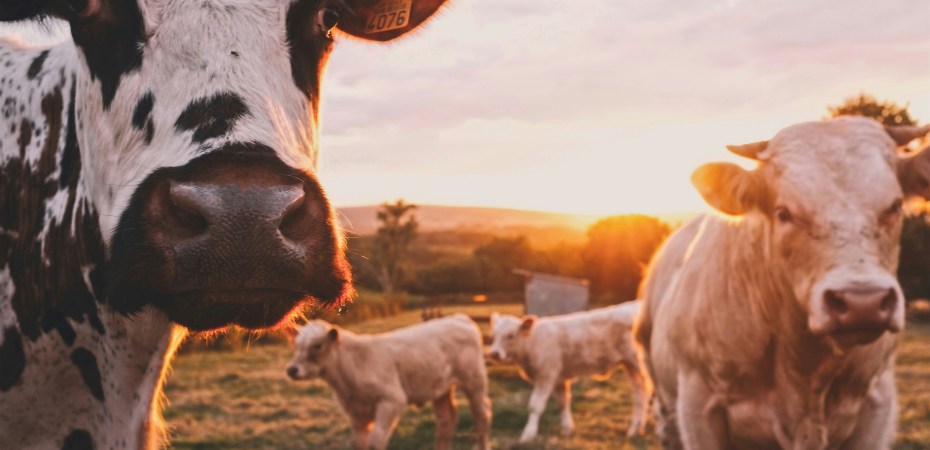
We didn’t have much money, but we never lacked food—my uncle’s farm, just a short drive away, took care of that. When the peas were ready, my dad would get a call from my uncle. Dad would pick up the peas and we would spend hours shelling them and enjoying their raw sweetness, after which those remaining would be frozen. When the corn was ready, we would shuck, boil, and eat to our heart’s content, and then scrape the kernels from the remaining cobs and freeze them. There was a very old, very large Wolf River apple tree on the farm. Every fall we would pick up the fallen apples for fresh eating and for pies. Every Easter my uncle would give us three baby chicks to raise, one for each child in our family. When they got too big to keep in the house, they would go back to the farm. Only later did we learn that the chickens we ate for Sunday dinner were the very same chickens that we raised. Once we realized that, all three of us children boycotted the chicken meat.

Whenever there was something to celebrate, the clan got together at the farm for a feast. I can still taste the bratwurst in beer, the grilled burgers, the corn on the cob, peas and carrots, casseroles, breads, and desserts, all served on a row of farmhouse tables (one large table being too small for the amount of food and the number of guests). The house bustled and burped with largesse and laughter.
Every Sunday morning, we had to get up at 4:30 to arrive in time for the 6:00 Mass. When we tumbled out of bed, Dad was already busy peeling the potatoes and covering them with water so they would not turn brown before we got back from church. After Mass, the potatoes would be boiled and mashed. Chicken, mashed potatoes, corn, and peas were our usual Sunday fare.
We walked almost everywhere—the town was only a few miles across, so a car seemed more of a hindrance than a help. (You had to get it out of the garage, weave through traffic, perhaps detour to a gas station, and find a parking place.). Taking a walk was a family outing usually ended up at the ice cream parlor. After all that walking, calories were not a concern.
St. Mary’s Church was perched on a high hill overlooking the downtown. When I was old enough to choose my own Mass time, I walked the mile to church carrying my guitar and music. I don’t remember the exact number of steps up the hill to the church from downtown, but it must have been about 100. The nice thing about the stairs was the lack of regimentation. I didn’t have to move at the same pace as a line of traffic. I could stop and look around. At the bottom of the hill, there wasn’t much to see—just the houses packed between where the downtown ended and the steep ascent began. But increasing altitude gradually revealed a panoramic view of the town, the harbor, and “the lake” (technically Lake Michigan, but since it was the only large lake we knew, it was simply “the lake,” as if it was the one and only lake worthy of the definite article).

The library, which was on the second floor of an old, old building, has since been demolished. The wood floors creaked even under the weight of a child. The picture books were on the lowest shelf; a child could easily pull them out one by one until she was surrounded by pictures that stirred her imagination. The librarians were magical people: like Mary Poppins, they opened the doors to adventures and exploration while simultaneously enforcing discipline (“No talking in the library!” . . . which made it seem a little like a church to me). Just by being in the library, I could explore the whole world and everything in it. Doing it by plane would be far less comfortable, and infinitely more expensive, and you could only see the things on someone else’s tour plan. In the library, I could travel at my own pace, choose my own points of interest, and do it all for zero money.
There was a corner grocery store across the street from our house. As soon as I was old enough to cross the street alone my mother would dispatch me with a handful of bills and coins to pick up a few items for supper. There was a candy barrel between the front door and the check-out counter. Exiting shoppers were invited to take a piece. Old Mrs. Paulin made sure that I never left empty-handed.
Our family doctor was not part of a clinic, much less a “health care system.” He was personally chosen by each of his patients to be the one person they trusted with their health and life. He visited his patients in the hospital and answered their questions. He answered his home phone in the evening, or even in the middle of the night. He had an office for routine check-ups, but he made house calls instead of forcing sick people to come to him. This protected patients from the stress of travel and the public from infectious diseases. His very presence was key to the healing process because he never abandoned anyone who had placed their trust in him. He was always there when you needed him. You could rely on your family doctor, no matter what happened to you or when it happened.
Ministers and priests shared that ethos of personal concern, service, and commitment. They, too, visited the sick in their homes. They were not only preachers and liturgical leaders; most of all they were pastors—shepherds who lived their lives with and for their sheep. They, too, were people you could count on to accompany you through any difficulty no matter how dire.
The policemen walked their beat, greeting anyone who happened to be outside when they passed. Each police officer was known and trusted by the community. They were unofficial arbiters of small-scale disagreements, thereby preventing an escalation of conflicts in many instances. They were often willing to lend a hand with a car that wouldn’t start; they would help change a flat tire. They gave “big brother” talks to teens who were popping wheelies or doing donuts. They were there to keep the peace, to prevent harm, and to nip illegal activity in the bud before it resulted in jail time.
In sum, the world was interesting, safe, healthy, fun, and simple when I was a child. How did it get so screwed up?


I loved reasing about your childhood memories! My childhood was also much simpler. I grew up in the late 70’s and 80’s. I remember staying out til dark and hearing the dinner bell being changed, signaling our necessary return to home. Drinking from the hose in the summer and riding our bikes anywhere we wanted. Raising my child in the 90’s brought on different rules and activities. Worried about strangers who could would harm him. Keeping my eyes on him all the time. Yes, past days were so much better, but I have a hope and faith that God watches over us and even though the world is crazy right now, we can continue to be God’s light in the world to those who may not know him. Thank you for your precious memories!
LikeLiked by 2 people