

by Joseph Stoutzenberger
When I decided to write a book exploring the basics of the Catholic faith (called Mystery & Tradition: Catholicism for Today’s Spiritual Seekers), I looked at other books that claimed to be doing the same thing. I was struck by two omissions that I found in many of them. For one, “the church” essentially means the institution—the Catholic Church and its leaders, past and present. For another, many such books avoid the topic of morality or, at best, mention it briefly. The problem with these omissions is that they overlook where, how, and among whom Catholicism is largely lived out in the world today.
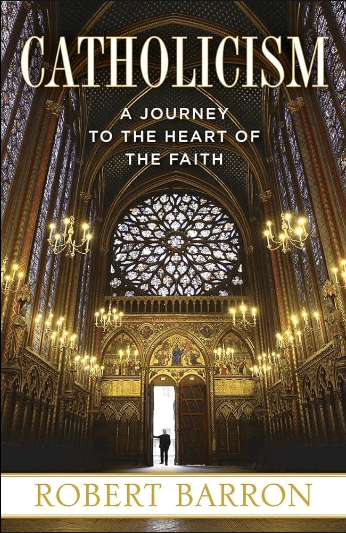
A little over a decade ago, Father Robert Barron, now a bishop, wrote a popular and engaging book to accompany a video series called Catholicism: A Journey to the Heart of the Faith. The book and video series are filled with images of churches and religious art. Early in his book (page 3), he talks about the central teaching of Catholicism, the Incarnation, which he calls the enfleshment of God. God continues to be enfleshed in the Church. He lists how, for him, that enfleshment is present through the Church today: in the sacraments, in the Liturgy, in the work of theologians, in the governance of popes and bishops, in the saints, and in Catholic art. What’s missing? How about the everyday, commonplace expressions of love happening in families, friendships, schools, businesses, supermarkets, and the simple exchanges Catholics make throughout their lives?

I recently had the honor of serving as a Confirmation sponsor for my grandson. After the ceremony, many of the boys headed off to their CYO (in Philadelphia, Catholic Youth Organization) basketball game. Confirmation was quickly forgotten, but before the game, players and coaches gathered at center court to recite the Hail Mary, followed by asking the blessing of the patron saints of the two parishes facing off against each other. This little ritual may seem mindless and pro forma for Catholic activities but think about it. The coaches, who volunteer their time three or four evenings a week, spoke words of praise and encouragement as players shuffled in and out and made sure that sportsmanlike conduct prevailed despite the hard-fought game. Their passion was basketball and the young boys they coached, but if pushed and explained, they would hesitantly admit that Christ was present through them and in the gym as much as in the church next door. Across the river, in Camden, New Jersey, Our Lady of Lourdes Hospital publishes a monthly calendar displayed throughout the hospital. It contains thoughtful reflections for each day and is called “God-Spotting: Finding God in the Everyday.” It serves as one more reminder that those who work at the hospital in whatever capacity are the enfleshment of God.

Surely, Barron would agree that Catholicism and the Incarnation extend beyond church walls. However, by not making that case more explicit in concrete situations, he runs the risk of reinforcing the popular perception that “the Catholic Church” exists in popes and bishops and theologians, and sacraments that are not connected to the lives most Catholics live. Church buildings and sacramental practices are meant to remind us of the holiness that surrounds us. Barron does write about Peter Maurin, Dorothy Day, and the Catholic Worker Movement in his discussion of the last judgment scene in Matthew, chapter 25. (It seems that Dorothy Day is the one layperson who must always be included in any discussion of modern Catholicism. What is seldom mentioned is that she found her greatest joy in spending time with her granddaughter, as many older Catholics do.) However, in his treatment of saints, Barron discusses only four women, all of them religious sisters, two of whom were actually cloistered Carmelite nuns. Here in Philadelphia, unfortunately, the monastery of the Carmelite nuns on North Broad Street was recently shuttered, while CYO basketball continues to thrive. And there are many Catholic women and men, married and unmarried, inspired by their faith, who serve as teachers, healthcare workers, and volunteers in service organizations. The Church Barron writes about is antique and inconsequential unless connected to where the great majority of Catholics are.
In the Index to Barron’s book, there are no entries for the words morality, conscience, or natural law. There are multiple references to sin but in a general, symbolic, or abstract way, such as in his lengthy discussion of Dante’s depiction of hell and purgatory in his Divine Comedy. He does not speak to the concerns of the young couple wanting to have a family but who are struggling getting pregnant, or the teen trying to navigate the epidemic of anxiety and depression plaguing our society today. At least not directly. Barron’s enthusiasm for all things Catholic is certainly commendable and comes through vividly and powerfully in his books and videos. While I am sure that Barron would say that, indeed, Catholicism speaks to everyday concerns, not to do so explicitly runs the risk of reducing Catholicism to what Gerald O’Collins calls in Catholicism: A Very Short Introduction, “at best merely cosmetic decoration” and misses the heart of the faith, lived out today in gyms and supermarkets as well as in our churches.
This blog was originally published in February 2024 on Joseph Stoutzenberger’s blog.


You are absolutely right, Joe! Thank you for your reflection.
LikeLike