
by Rabbi James Rudin
Years ago, as a freshly minted young rabbi, I was a United States Air Force chaplain stationed at Itazuke Air Base in southern Japan located about ninety miles from the city of Nagasaki.

Rabbi James Rudin was a US Air Force Chaplain at the Iwakuni Marine Corps Facility in Japan. Photo Courtesy of Rabbi Rudin.
Two days after my arrival at the huge base, I was officially introduced to Itazuke’s commander. He was a gruff fighter pilot, an aerial “ace” during World War II, who in physical appearance and style of speaking could have been John Wayne’s clone.
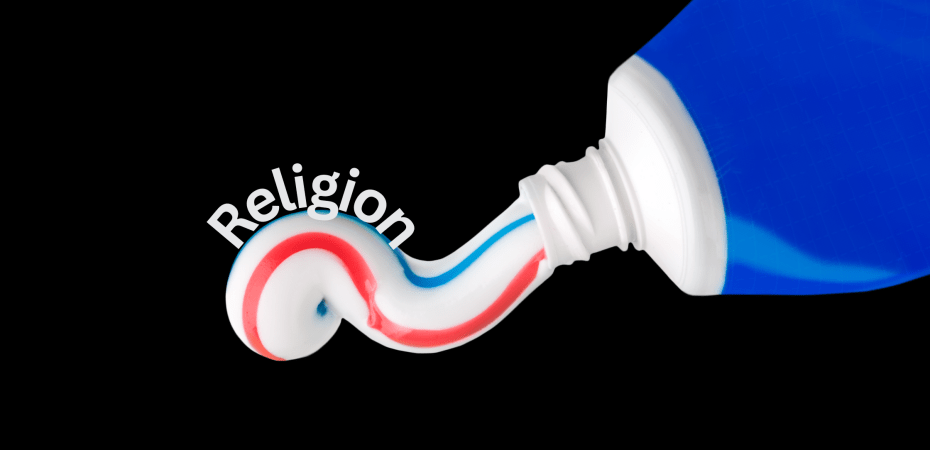
The colonel did not ask me to sit down. He never looked up from his desk, made no eye contact with me, and simply muttered: “Chaplain, you Air Force ‘holy Joes’ need to dispense religion like toothpaste. Just squeeze out your religions for the troops. Frankly, I have no preference for a specific toothpaste or a particular religion; for me, they are all the same. Welcome to Itazuke, Chaplain; do your duty, carry out our mission, and good luck.” The meeting was over.
In a way, the base commander was correct. For many years, there were only three kinds of religious “toothpaste” dispensed in the military: Judaism, Catholicism, and Protestantism. And for decades all military chaplains wore one of two special insignias on their uniforms: a cross or two tablets with 10 Roman numerals symbolizing the Ten Commandments with a six-pointed Star of David above the tablets.
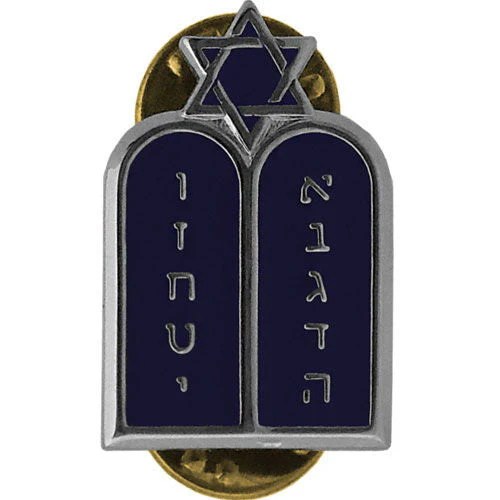
The Roman numerals were historically inappropriate, even insulting, since it was the despised Roman Empire that destroyed Judaism’s Holy Temple in Jerusalem in the year 70. So I was pleased when in 1981, the insignia’s Roman numbers were replaced with the first 10 letters of the Hebrew alphabet.
And the days are long over when the U.S. military acknowledged only three major religious groups within its ranks. The Department of Defense has officially recognized at least 221 religions, including Islam, Buddhism, Hinduism, Unitarianism, paganism, atheism, humanism, and agnosticism, as well as Wicca, druidism, and many more. The extensive Pentagon list also differentiated among the various streams of Judaism and the diverse Protestant communities.
Interestingly, a total of 22% of the men and women in today’s military list “none” when queried about their religious identification. As a result, all military personnel, whatever their religion or lack of one, must be afforded equal rights, privileges, and protections. This belated recognition of the rich spiritual diversity that exists today is an extraordinary change and is light-years away from one of the most shameful chapters in the long history of American military chaplaincy.
On March 26, 1945, a now historic controversy erupted when Rabbi Roland Gittelsohn, a U.S. Navy chaplain who served with the Marines during the bitter and bloody battle of Iwo Jima, was invited to deliver the main memorial address at an interreligious dedication of the military cemetery on the tiny Pacific island.
When several Christian chaplains objected to a Jew officiating over Christian graves, his invitation was withdrawn. The interreligious dedication was scrapped and Gittelsohn instead dedicated a cemetery where only dead Jewish Marines were freshly buried. However, in a show of solidarity, three Christian chaplains attended the service. They were so deeply moved by the rabbi’s eloquent words they distributed his remarks to other military chaplains throughout the world.
Time magazine published excerpts, which wire services spread even further. The entire sermon was inserted into the Congressional Record, the Army released the eulogy for short-wave broadcast to American troops throughout the world, and the rabbi’s powerful words were read on many succeeding Memorial Days.
Ironically, the powerful eulogy Gittelsohn had originally written for the aborted interreligious service, excerpted here, became the best-known and still widely read sermon of World War II:
“Here no man prefers another because of his faith or despises him because of his color. … Here there are no quotas of how many from each group are admitted or allowed. Among these men there is no discrimination. No prejudices. No hatred. Theirs is the highest and purest democracy. … Whosoever of us lifts his hand in hate against a brother, or who thinks himself superior to those who happen to be in the minority, makes of this ceremony and the bloody sacrifice it commemorates, an empty, hollow mockery. … ”
After the war, Gittelsohn became the senior rabbi of Temple Israel in Boston, the author of many significant theological books, and president of the Central Conference of American Rabbis.
Shortly before his death in 1995, Gittelsohn offered the closing prayer at the Iwo Jima Memorial in Arlington, Va., commemorating the 50th anniversary of that horrific battle. Gittelsohn reflected:
“I have often wondered whether anyone would ever have heard of my Iwo Jima sermon had it not been for the bigoted attempt to ban it.”

I think even my Itazuke base commander would recognize that Roland Gittelsohn and many other military chaplains “dispense” much more than spiritual “toothpaste.”
Rabbi A. James Rudin is the American Jewish Committee’s senior interreligious adviser. His latest book is “The People In The Room: Rabbis, Nuns, Pastors, Popes, And Presidents.”
 iPub Forum
Love IT and You👏🏻LeeSent from my iPhone
LikeLike