
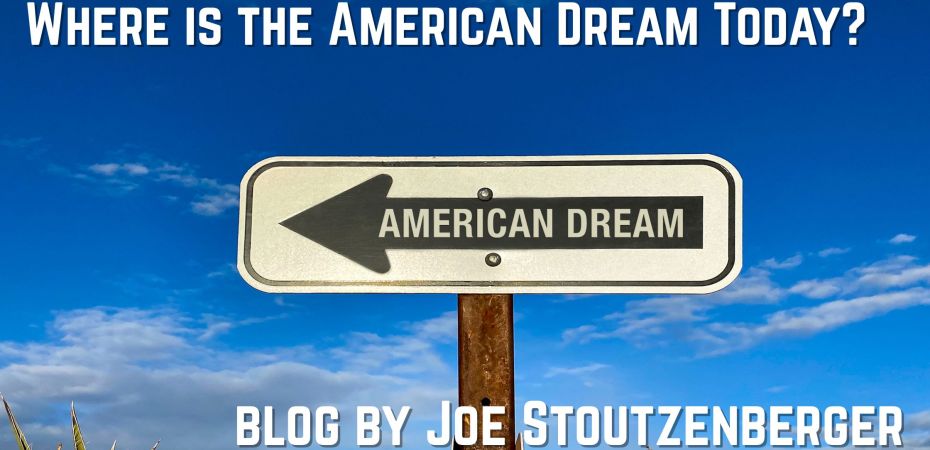
by Joe Stoutzenberger
A few years ago, I had a class of twenty-five students. Looking over the class list, I discovered that thirteen students had Hispanic surnames. They typically were studying to be nurses or to work in another medical field. School policy was not to inquire about a student’s citizenship status, but it is likely that some of mine were noncitizens and aspired to be American citizens. I also had a student who was “gender fluid,” self-identifying as “they.” Can the American dream be their dream? Is there a foundation for their aspirations?
The Declaration of Independence’s underlying principle is:
“We hold these truths to be self-evident, that all men are created equal, that they are endowed by their Creator with certain unalienable Rights, that among these are Life, Liberty and the pursuit of Happiness.”
As lived out in history, that principle was more a challenge, an aspiration, a “dream,” in the words of Martin Luther King, Jr. It began with a group of American colonists describing how their life, liberty, and pursuit of happiness were being thwarted by the British king who claimed sovereignty over them. A lingering question was unaddressed: What about enslaved people? Don’t they have a right to liberty and the pursuit of happiness as well? That question was finally settled on June 19, 1865, when the last group of enslaved people received the news that they were now free, as celebrated in the Juneteenth national holiday.
Since then, other Americans have been inspired to stand up against policies and practices they saw as violating their liberty and pursuit of happiness. Factory workers, many of them immigrants, organized to demand living wages and humane working conditions. After many years seeking the right to vote, in 1920, women achieved that right. In the 1960s, a number of liberation movements formed, demanding that the dream of the Declaration of Independence be applied to them. The 1963 march on Washington was a pivotal moment in the civil rights movement. Segregated schools, bathrooms, and lunch counters were a de facto impediment to liberty for African-Americans. The 1969 police raid on a New York gathering place sparked the gay rights movement, culminating in legal recognition of same-sex couples to marry. The first Earth Day in 1970 was a seminal moment in extending the right to life and liberty beyond just human beings. The 1973 Roe v. Wade Supreme Court ruling sparked controversy about when, during the course of gestation, there is a person who has a right to life, liberty, and the pursuit of happiness, along with all other Americans. The judges essentially ruled that there is no definitive answer to that question, and therefore, with a few restrictions, women had a constitutional right to an abortion. In 2022, the Supreme Court’s Dobbs ruling left decisions regarding abortion and protections for the unborn up to individual states.

What groups today are clamoring that the dream underlying the Declaration of Independence applies to them? Two groups calling for liberty and the pursuit of happiness are immigrants and sexual minorities. One subgroup of immigrants, those who came to this country as children and have only known America as their home, even call themselves “dreamers.” They hope that a path to citizenship can be established for them. Does “all men are created equal and are endowed with unalienable rights” apply to non-citizens as well as citizens? When the nation was founded, white men who owned property possessed rights that others did not. Over time, Americans came to see that equality and equal rights applied to ever-expanding members of society. At the very least, the Declaration implies that all people are to be treated with dignity and respect. It says “all men,” not “all citizens.” There are also Americans who find that the gender “assigned to them at birth” is not an accurate identification of who they are. In their mind, to deny them treatments and surgical procedures that would align them with how they perceive their true self to be is a rejection of their right to liberty and the pursuit of happiness enshrined in the Declaration.
Americans celebrate the Declaration of Independence every July 4. If the celebration included reading the document along with lively discussion about how it can be applied today, it would reveal that the American dream continues to inspire people on the margins, clamoring to be part of that dream. To stop dreaming is to end the American experiment that has given solace and hope to generations of dream seekers.
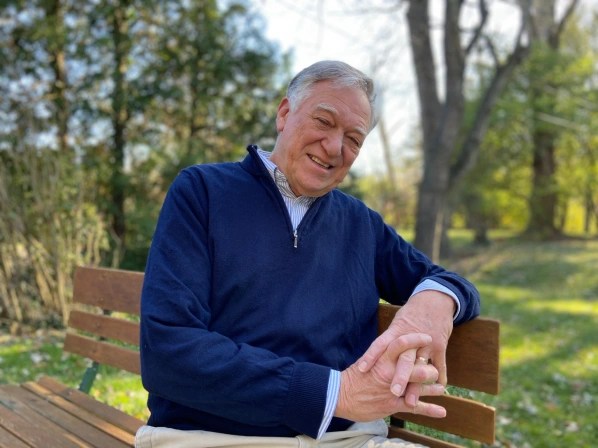
About the Author: Joseph Stoutzenberger spent fifty years in education. For more than twenty-five years, he was a Professor of Religious Studies at Holy Family University in Philadelphia. He taught religious studies and served as Director of Campus Ministry at Manor College, Jenkintown, PA. He taught in the Catechist Preparation Program for the Diocese of Camden, NJ, and conducted workshops on parent-teen communication for the Archdiocese of Philadelphia.
He received his M.A. and Ph.D. in religion from Temple University and a master’s degree in religious education from Loyola University, Chicago. He has actively participated in interreligious dialogue activities, contributing to several books, such as Removing Anti-Judaism from the Pulpit and Interfaith Dialogue at the Grass Roots. He serves on the board of the Pennsylvania Peace Islands Institute and has lectured on Catholic perspectives on the Hizmet movement.
He has written textbooks for Catholic high schools and books on world religions and spirituality for adults. He has authored or co-authored three books on St. Francis of Assisi, most recently on Francis and nature. He has written study guides on Ukrainian Catholicism for the Eparchy of St. Josaphat in Parma. Stoutzenberger lives in Erdenheim, PA, with his wife, Mary, with whom he shares numerous children and grandchildren.
Check out Joe’s newest book: Mystery & Tradition: Catholicism for Today’s Spiritual Seekers at ipubcloud.org!
 iPub Forum
As an American I can agree with most of your article. The US people were lost in the 70’s and were give Reagan. This turned the tide and made most US citizens proud to be an American. Then the 90’s hit. We saw scandal after scandal and people lost trust in most all of Government. Then it got worse with Bush and Obama. Then Trump tried to build up the people and country once again and was fought at every turn with impachment, lies and terrible rhetoric. Then when we didn’t think it could get any worse, Biden emerges in a questionable election victory and for 4 horrible years the country fell back again and again. Borders were pourous, people became distraught. Then 2024 ushered in a new Trump that has now the power to move the country forward. We’ve seen a tremendous turnaround in just 8 months and hopefully more to come. People are walking a little taller and we’re holding our breath in hopes the radical left will implode as it seems they are working towards.
LikeLike
Joel, Thank you for commenting on my blog. My brother Steve lives in an apartment, and a man from Nepal moved in next door. Steve asked him why he was here, and the man replied, “to pursue the American dream.” I imagine most immigrants would say the same thing, as I mentioned in my blog. My experience of Americans seems to be different from yours. Most people I know feel anxious about the state of the country right now. I know a number of people who lost their government jobs, and those who are still employed by the federal government are too worried they may be next that they are not concentrating on the work they’re supposed to be doing. A friend of mine just texted me from Italy and said that most fellow Americans he meets there are saying “I’m Canadian” because President Trump is so unpopular throughout Europe that they don’t want to be associated with him and America under him. I’m glad you are finding people walking taller. The Italians my friend is meeting say they won’t come to America now because it is too dangerous. I’m surprised you are not finding people who are upset and anxious over what has been happening in the past six months. Polls I’m seeing suggest that more people are in the fearful and unhappy camp than those you are seeing. Hopefully the American Dream is alive and well enough to give hope and happiness to all Americans.
–Joe
LikeLike