
by James Rudin
On October 27th, Israeli voters will elect members of a new Knesset (Parliament). It will be a bitter, divisive election that may or may not unseat Prime Minister Benjamin Netanyahu.
But sharp divisions within both the Israeli and American Jewish communities are nothing new. They existed for decades before Israel achieved its independence in 1948.
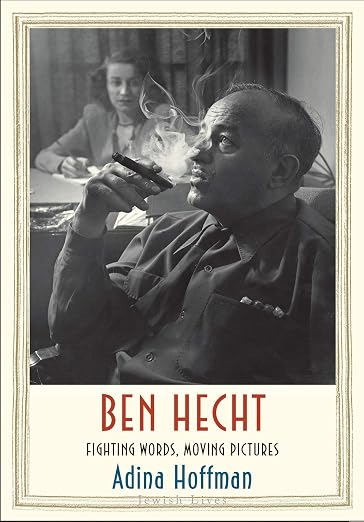
In her book, Ben Hecht: Fighting Words, Moving Pictures (Yale University Press), essayist and biographer Adina Hoffman captures that acrimony as reflected in the turbulent life of one of America’s most talented and prolific screenwriters. Hecht also wrote novels, magazine articles, multi-media historical pageants, and hard-hitting political commentaries.
Though he never spent more than eight weeks on a script, Hecht succeeded in creating crackling dialogue and fast-talking characters. The French-Swiss film director Jean-Luc Godard called Hecht, “a genius who invented 80 percent of what is used in Hollywood movies today.” Indeed, Hecht worked on nearly 200 films, sometimes without credit, including Gone with the Wind, Roman Holiday, A Farewell to Arms, The Front Page, Spellbound, Notorious, A Star Is Born, Wuthering Heights, Gunga Din, Stagecoach, Strangers on a Train, Duel in the Sun, and Scarface.
Born on New York City’s Lower East Side in 1894, Hecht moved at age 10 with his immigrant parents to Racine, WI. Following high school graduation, he headed for Chicago, where he became a brilliant newspaper reporter in the years before World War I. His journalistic experiences, especially in bars, brothels, and boarding houses, found expression in his classic stage play The Front Page, adapted later as a film.
In 1926, Hecht received a telegram from his friend, screenwriter Herman J. Mankiewicz, that would change his life:
“Will you accept $300 per week to work for Paramount Pictures? All expenses paid. The three hundred is peanuts. Millions are to be grabbed out here and your only competition is idiots. Don’t let this get around.”
Hecht accepted the invitation (the monetary offering would’ve been the equivalent of $5680 today), and although he claimed to hate Hollywood’s values, he soon became Tinsel Town’s highest-paid screenwriter.
Cynical about politicians and humanity in general, Hecht never involved himself in the left-wing politics that were prevalent in Hollywood during the 1930s. He also considered himself thoroughly American and eschewed synagogue attendance – but the rise of Nazism and impending threat to Europe’s Jews shattered his indifference.
His fervent embrace of a Jewish “cause” came as a surprise to his family, friends, and probably to himself. It was sparked by his anger at President Franklin D. Roosevelt for refusing to liberalize the quota system that severely limited the number of Jewish refugees desperately seeking escape from Hitler and entry into the United States.
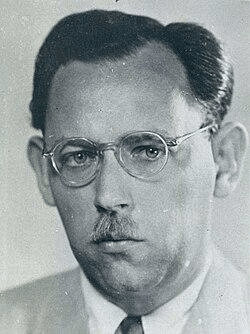
Image: Hillel Kook. Image Credit: Wikipedia
In 1940, Hecht met Peter Bergson, a 25-year-old Palestinian Jew whose real name was Hillel Kook. A nephew of the Ashkenazi chief rabbi of British Mandate Palestine, Bergson was a member of the Irgun, a Revisionist Zionist group that advocated direct political and military action to rescue endangered Jews, expel British forces from Palestine, and establish an independent Jewish state.
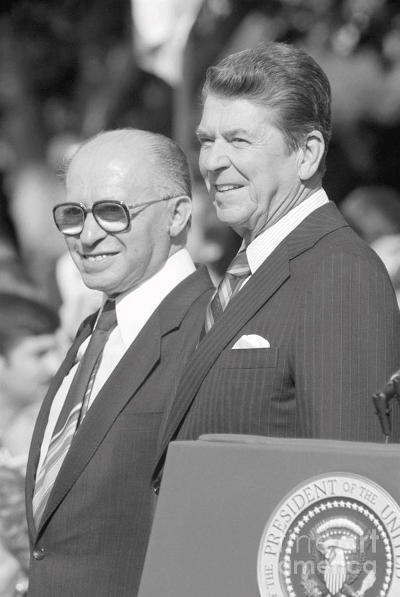
Image: 11/26/1982-Washington: Israel’s Prime Minister Menachem Begin is shown with Pres. Reagan in 1981. Image Credit: Getty Images
Among Bergson’s mentors was Irgun leader and future Israeli prime minister, Menachem Begin. Attracted to the Irgun’s call to action, Hecht used his writing skills for the cause, including full-page ads in the New York Times and other major newspapers demanding immediate action to rescue Europe’s Jews.
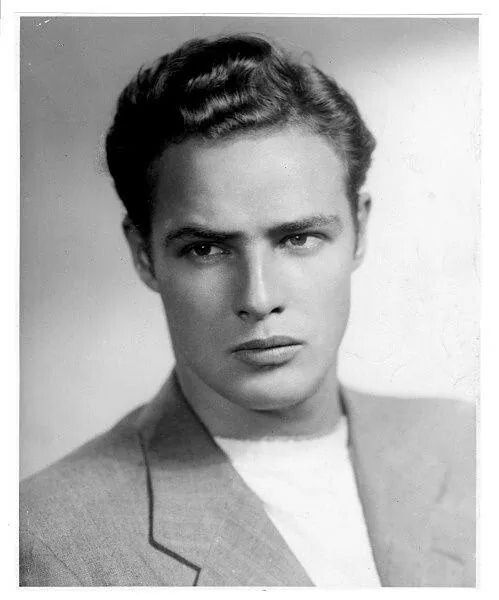
Image: Young Marlon Brando. Photo Credit: IMDB
Hecht scripted two powerful historical pageants supporting Jewish statehood that attracted more than 100,000 people in New York, Washington, and other cities. DC audiences included Eleanor Roosevelt, Supreme Court Justices, and numerous members of the US Congress. Hecht had personally recruited Hollywood celebrities and film stars to appear in these pageants, including 22 year old Marlon Brando, Paul Muni, Edward G. Robinson (who spent a year as a rabbinical student at Hebrew Union College in Cincinnati before turning to acting), and musical composer Kurt Weill, a refugee from Nazi Germany.
Hecht’s all-out support for the Irgun fighters, whom he called “my brave friends,” stirred opposition from Rabbi Stephen Wise, America’s most prominent Jewish leader.
Rabbi Wise condemned as propaganda Hecht’s campaign slogans, which included “Action – not pity – can save millions now!”
Adina Hoffman recounts an acerbic phone conversation between Hecht and Wise, following the rabbi’s insistence that he be brought in to “advise” Hecht and Bergson on the appropriate way to alert the American public and FDR about the dangers of Nazism. Irritated by the sonorous vocal tones of the famous rabbi, Hecht later wrote, “I have never known a man with [such] a …voice who wasn’t either a con-man or a bad actor.” Hoffman reports that Hecht hung up on the world-famous rabbi. (Full disclosure: my 2015 biography of Wise was nominated for a Pulitzer Prize for History.)
The brash writer was equally at odds with Israeli Prime Minister David Ben-Gurion, President Chaim Weizmann, and the entire ruling Israeli “establishment” because of their bitter enmity toward what they regarded as the Irgun’s radical leadership and extremist tactics.
Despite his commitment to the Irgun and its philosophy, Hecht never visited Israel. After 1948, he lost interest in the cause, and went back to writing a series of brilliant screenplays until his death in 1964.
Menachem Begin attended Hecht’s funeral service at Congregation Rodeph Shalom in Manhattan. His tribute was on point: “Ben Hecht wielded his pen like a drawn sword.”

