
by Joe Stoutzenberger
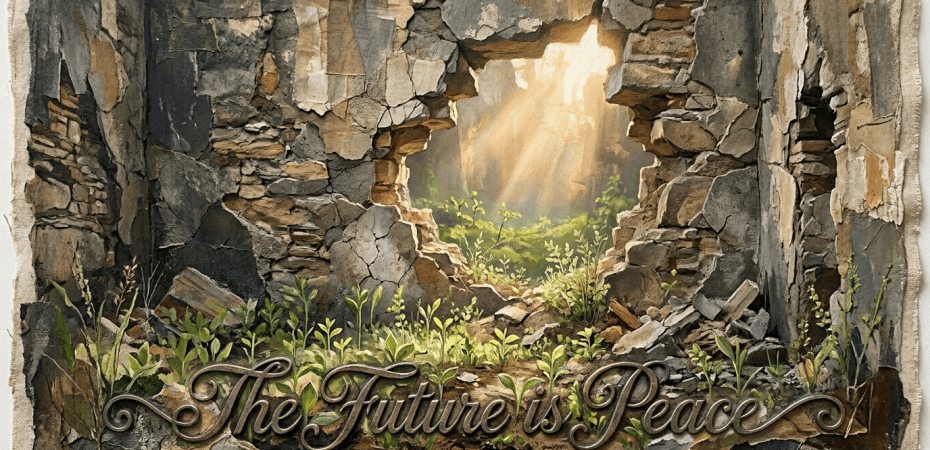
I have been reading a book co-authored by two peace activists, a Palestinian and an Israeli, both of whom recently lost family members in the Israeli-Palestinian conflict. I was struck by the hopeful title, The Future Is Peace. Given the war-torn devastation in so many parts of the world, how can a peaceful future be affirmed in such an unambiguous statement: the future is peace? Most of the book recounts horrible stories of torture, destruction, and death. Will that all stop sometime in the future, hopefully sooner rather than later? Then I came to a stark realization. The future depends on peace and an end to destruction. Otherwise, there will be no future. Not even a dystopian one, such as some novelists and moviemakers have depicted for over a century now. Remember the constant state of warfare in Orwell’s 1984, or H. G. Wells’s The Time Machine, where bloodthirsty Morlocks feast on the childlike, powerless Eloi. Endless warfare leads to the death of our species. Peace is the only future there can be. Unless we humans find a way to renounce warfare, we will have no place in the future. The universe will continue to unfold without us.
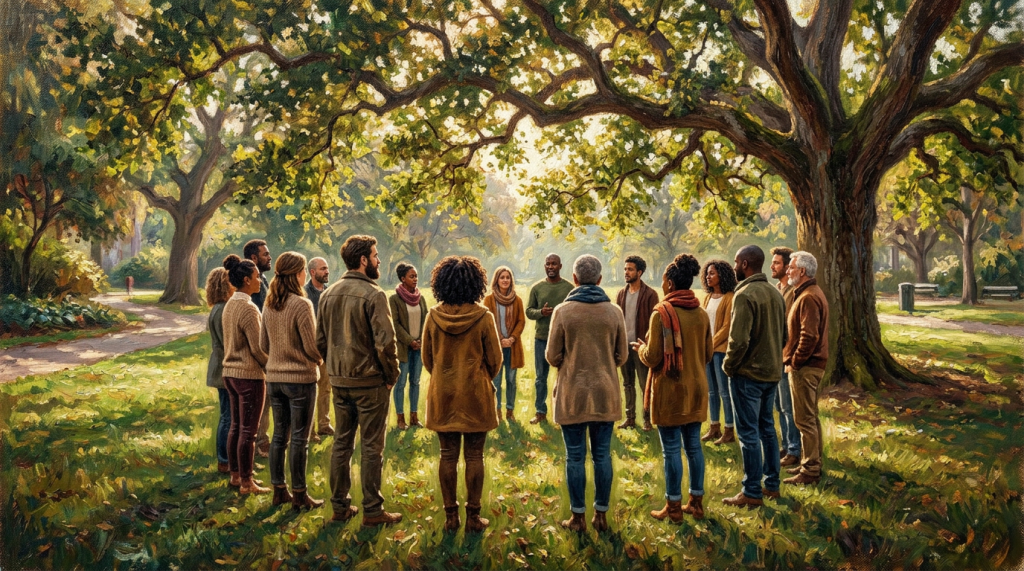
Above Image: A diverse group gathers in a sunlit park for a thoughtful outdoor conversation.
One of the peace activists in the book, the Maoz, the Israeili writes that people in the Middle East have been told for centuries that one more war would bring peace, but it never does. Only the painstaking process of dialogue and fostering the well-being of all people offers hope for a peaceful future. I was curious how the authors were going to end their book, focused as it is on the current disastrous Israeli-Palestinian state of affairs, especially after giving many more examples of violent incidents than peacemaking programs. The book ends with the two men attending a Vatican-sponsored program on peace and justice in Italy, overseen by Pope Francis. When they were invited to speak, they simply said who they were: a grieving Palestinian who had lost a beloved brother murdered by Israeli soldiers, and a heart-sick Israeli whose parents were murdered during the October 7 attack on a kibbutz. Despite his frail condition, Pope Francis motioned for the two men to come up to him and embraced them. They asked Pope Francis to do all that he can to help the situation in Gaza and Israel. The pope said that they should not rely on political leaders to bring about peace. Only everyday people, like them, who meet each other, share their stories, and dedicate themselves to peacemaking will make a difference. After that encounter, every day until his death, Pope Francis called the pastor of Holy Family Catholic Church in Gaza every day until his death to inquire how everyone was doing amidst the turmoil and violence happening around them.
One positive, hopeful example the book recounts was the experience the two authors had in a Gaza hospital. Aziz, the Palestinian, talked about his battle with cancer, which was treated at Holy Family Hospital there. He had both Palestinian and Jewish doctors, Muslim and Christian caregivers. They were all dedicated to healing and care for the sick, regardless of their nationality. That struck me as a future-oriented oasis in a land being devastated by constant bombing. People worldwide need to heed the same message: We are all in this together. In 1624, English poet John Donne wrote about a realization he had while recovering from an illness: “Any man’s death diminishes me, because I am involved in mankind.” We need to dedicate whatever gifts and talents we have to serve one another. That’s what hope is—the only path to a future. The title of the book states a stark reality: No peace, no future. That’s not doomsday thinking. That’s reality. The message for believers of all faiths is that God expects nothing less than for us to be peacemakers. All people of good will have a stake in creating the future, and that future can only be peaceful.
Editor’s Note: This blog was first published on Joseph Stoutzenberger’s blog on September 3, 2026, and re-shared here with his permission.

